Am I the only one who loves this? The arguments here all seem to portray this as if Wu-Tang, or anybody really, plans on using this as a new business model that is sustainable and repeatable. In that light it is seen as "regressive" and "anti-innovative", or it won't work because it'll get leaked, history trends toward open etc.
In reality it's a very smart marketing tactic (they're selling another album with regular distribution btw), and is a piece of performance art in its own right. It raises questions and encourages discussion about the value of art & music in the digital age. This is particularly noteworthy coming from the rap genre which is typically not given enough credit for its role in shaping music trends and pop culture generally. The "art" in question isn't really about the music, it's about framing music as art.
I don't even listen to Wu-Tang, but I think this is awesome. This is creative and interesting. People like myself who would otherwise never read or think about Wu-Tang are pondering how this will work and what the implications (if any) will be. That's awesome.
> and is a piece of performance art in its own right
If you're unfamiliar with Wu-Tang you may enjoy this video which is GZA rhyming about the big bang. Wu-Tang is pretty much the opposite of what the stereotype about rap culture is. They are intelligent and try to spread positivity in the world. https://www.youtube.com/watch?v=Ajs48XRlOqc
>Wu-Tang is pretty much the opposite of what the stereotype about rap culture is
As a die hard rap and Wu fan I would just like to say that very few artists actually fall into that stereotype. There's no "rap culture". Rap is about expression, and it happens to express different things when made by different people.
As a die hard rap fan as well, I would say the vast majority of artists fall into that stereotype.
I love rap, but even I have to admit that a lot of rap lyrics are dumb and offensive, and definitely play into the hands of those who talk about "rap culture" (I think Boondocks does a pretty good job of showing this by the way).
IMO the majority of artists that are positioning themselves as "rappers" are actually pop artists, coming straight from the assembly line of the big music publishers. (also truhead speaking here)
Not a big Wu fan, but I'm die hard hip hop fan also.
Pretty much everyone in the mainstream falls into exactly that category. Macklemore probably the exception to the rule at the moment.
Compare with the underground artists like Atmosphere, Brother Ali, Immortal Technique, Shad, Jurassic 5, Blackalicious etc.
They are worlds apart! It's such a shame that hip hop has ben positioned as an almost antithesis of intelligent music in the public eye, when it started out as music with a message (much of the underground still has that ethos). It's so bad that I usually have to justify my music choices to people who know no better "why would you listen to that shit? - nothing but bitches and ho's".
That's why I consider "rap" (bad, commercial) and "hip hop" (good, art) to be two completely different types of music even though they're extremely closely related.
Compare Kanye West and Brother Ali to see one example of the difference.
EDIT: Switched to a better example of hip hop. Also, someone downvoted me for making a distinction? Strange.
The problem with this is that there is not only one framing, "music as art" but also another, "art as collectible good", which is the most banal meaning one can attribute to art.
Reproducibility has never detracted anything from important pieces of art, and has nothing to do with their artistical value; everyone has painting reproductions in their home, and that doesn't make the painting* less valuable.
For this reason, while there are certainly valuable discussions on generic terms, this remains a pure marketing stunt (or, a banal pseudo-intellectual statement).
*=of course, here there could be a debate about the value of the concept related to the original physical copy and its reproductions.
Jean Michel Jarre did this in 1983, I highly doubt that they were not aware of that when doing this. Musique Pour Supermarche is definitely not he best he made but the mechanism was exactly identical.
Agreed. The guy really seems to "get" things, which is always great to hear about an artist whose work you enjoy.
In addition to being a great album Wu-Tang Clan's album Forever was the first CD to offer multimedia when inserted into a PC! Not to say "enhanced CDs" are the pinnacle of technology, but it's an example of them being forward looking, so their willingness to try new things doesn't surprise me.
Absolutely highlights "record label" adds no value. Here they are being outsourced. The promo work is being turned on its head (buy promo to sell record vs give away record and get the promo). If it works it seems brilliant.
This actually isn't original, its a copycat tactic (Jay-Z did it first)#. The "record" in record lable being short for "recording". Here, they are giving away the reproduction rights under the expectation that the owner will (trivially) reproduce and distribute the "records" for token economics. The new "middleman" will be happy to do this <on their own dime> and basically give the recordings away. This will make sense because the promotional value of the giveaways will exceed the trivial reproduction costs. That is a pretty effective demonstration. Lastly, lets say they get 5 million dollars. That would be the equivalent of doing a 5x (million) platinum record sales, but with still better economics (less rip offs) on the production costs. So in this model, 1 sale to an "art market" is better than 5 million sales through a record label for the artist. And the consumers get basically free product (as swag). That seems like a win/win. That was the model upon which this structure was originally premised.
[For the downvoters: Read the Forbes article from 6 days ago, below]
I have some personal info on this exact issue from a good friend I trust that works with their label/is good friends with the members. Take it as you wish, but I can't help but share because it would be great if someone else confirmed it.
basically my friend told me that they were coerced into making a "last" album (this was before it was formally announced by them fyi), to pay off a group of club-bouncer thugs that follow them to all their events and threaten them for payment--I'll explain below.
When wu-tang was getting popular and played at inner city clubs, the manager would pick out 5-10 of the meanest looking guys in the crowd and tell them to essentially act as bouncers in the venue if things too got out of control. He couldn't pay then, but these guys would do this at every venue and over time, bonded over this newfound relationship with wu-tang clan. They got wu-tang tattoos on their arms and felt proud of the affiliation (almost to the tune of resembling a gang). Once wu-tang started playing gigs at bigger, mainstream venues these bouncer men were no longer needed.
These wu-tang tatoo'd bouncers felt wronged, and attributes wu-tang's success now with the protection they provided at dangerous inner-city clubs. They felt like they were employees in a sense and demanded a percentage of all the revenue the group was now making. They threaten the group and manager frequently and my friend said, wu-tang desperately needed to pay them off because they are all older now and fear for the safety of their families.
This album was then announced publicly and I can't help but put two and two together. Was this album created to get a quick sum of money to pay off the club bouncers once and for all? I can't stop thinking about it now.
I promise I'm not making this up, just wondering if anyone can confirm any of these assertions that are knowledgeable with wu-tang/hip hop.
I used to work club security for 6 years and have done at least 12 wu tang or wu affiliate shows. I've also done radio interviews with several of them when I was a DJ in the late 90s. I never saw anything that would be considered intimidation in this manner at any of their shows. The closest problem I can remember is some random guy in the crowd picking a fight with UGod while he was walking from the stage. But this happened with a lot of artist. Not saying a story like this isn't true but it sounds highly unlikely.
This story is just another piece of the wu's marketing genius. Could it be true? Sure, so they may as well have you think about it - argue the truth, etc. Mystery shrouds the shaolin sword.
Wu-Tang are one of the few music acts to really get that it's about entertainment.
"Quick" doesn't seem to apply to how long this has reportedly been in the works, how long the pre-sale tour involving "performances" at various museums will take, etc.
From what I've seen over the years, Wu-Tang has a propensity for such self-aggrandizement (and I mean that as a complement). I can certainly see them doing this project without ulterior fear-driven motivation.
Not saying your version isn't true, but applying Occam's Razor from my humble perspective. RZA having an epiphany of "hey, let's do a full blown album and sell one copy!" seems entirely fitting.
I think you got Wu tang mixed up with another group. Wu tang started getting popular in the 1990s. They have gone international since then, and their individual members have had very successful solo careers. What inner city club do they need protection from? Are you talking about the legendary hip-hop group Wu Tang because I think or your friend is mistaken?
I see this as regressive, not progressive. It is a regression to a time before recorded music, when the only way to listen to music was to attend a live performance. That appears to be what they want, and I understand the inherent romanticism in that, but I don't want to go back to that time.
Live music is amazing, but it is also a rare treat. (For me; I assume that many people here hear live music regularly.) Perhaps they want to force their work to be a rare treat. But I spent an hour last night, after lifting, just sitting on my couch with my iPad, listening to the punk music that was my soundtrack to high school. It was amazing, and made possible because of the ease of recording, distributing and listening to digital music.
Although, something to consider is that they must realize that once they start hosting these listening sessions, bootleg recordings will crop up. Perhaps they are counting on that, and this will be a way to have their cake and eat it too: their lone physical copy will remain special because it is the only real copy, but everyone will hear the music through the bootlegs, which will gain notoriety for being the only way to hear the "unique" recording.
In the financial times article, which is more in-depth, they mentioned taking serious security precautions for the exhibitions like searching people thoroughly and providing special headphones. It does indeed still seem possible for a determined attacker to figure out a way to make a copy, but they talked more about preventing it.
The idea of hosting listening sessions strikes me as a way to capitalize on a tour without providing the fans a live performance. They're trying to have it both ways - the scarcity of something that isn't recorded by 'performing' a recording.
Isn't that what photographers and other visual artists do? It's not like there's no work involved in producing an album, and this way your audience can hear your "perfected" version.
Visual art exhibitions aren't hip hop shows. I can't see how the audience experience and excitement isn't greatly diminished if you're paying to go somewhere to put on someone else's headphones to listen to a record. If someone wants to do that, more power to them. Tickets will probably be very limited and super expensive just reinforce the whole exclusivity and "high art" pretense. I'm just saying, it's hip hop.
The "that appears to be what they want" sentiment will, I suspect, be quite amusing to anyone who's ever bought tickets for a Wu-Tang gig only to find that (random number significantly less than the number of known Wu-Tang members) actually turns up on the night.
JOHN CAGE MATCH, Praxis, Wednesday (NTN) — The Wu-Tang Clan has announced the nonrelease of their new album Once Upon a Time in Shaolin, to be made available in an edition of no copies.
“Music is a commodity these days and we want it treated as art,” said RZA. “The LP record you listened to reverently at home gave way to the portable cassette and CD, and now the copiable and disposable MP3. But the rarer the art, the better. So we’re making the album available as no copies whatsoever. It’s artier that way.”
The album will be unavailable as a double blank CD-R, though the band is considering refusing to offer it on blank LP and blank cassette as well. An MP3 of silence will also be withheld, as will an Apple Lossless download of silence from iTunes. The first video, “ ”, is not up on YouTube and Vimeo in the form of four minutes’ silence and a blank screen.
The album failed to be recorded at home by the band over the past several years. “Art only suffers from excessive physical realisation. In fact, the more physical realisation, the further the art falls from the perfection of the conception. So what we did was stay home in bed and think really hard about what the record should sound like. Frankly, it’s amazing. Well, we think it would be.”
The band hopes to get five meeellion dollarsss for this conceptual work. “We firmly believe that art — art! — should not suffer the petty, tawdry, bourgeois constraints of genre, media gatekeepers, critics, quality or existence. But the absolutely key point — which we’re completely clear on — is that it should be paid for with actual money.”
MODAL LOGIC PROVES THE EXISTENCE OF ONCE UPON A TIME IN SHAOLIN
(I) The existence of a perfect Wu-Tang album does not necessarily entail the existence of gratuitous suffering.
(II) If a perfect Wu-Tang album is possible, then the perfect being necessarily exists (given axiom S5 of modal logic).
(III) The perfect Wu-Tang album is possible. (This is a logical consequence of (I).)
(IV) The perfect Wu-Tang album necessarily exists (modus ponens on (II) and (III).
(V) Therefore, the apparently-nonexistent album does in fact exist, and you should pay real money for it.
Wu-Tang are clearly being derivative of Vulfpeck here.
The problem that Vulfpeck had was that their music was too easy to copy. Because of the uniquely repetitive nature of most of their songs they matched the MP3 compression algorithm particularly well which made them simple to post in forums. For example, their best known song is available by playing the following characters as an MP3: [1]. Of course any music fan will pick out how derivative Vulfpeck is of John Gage[2], so I guess what goes around comes around.
Just currious... Say someone purchased the album and then sold duplicates, would Wu-Tang be able to sue? Technically there are no damages, Wu-Tang isn't out any money from missing album sales and the seller is just trying to make a decent ROI on his 5 million dollar asset.
Nope, in fact, that's precisely one of the avenues mentioned in other articles. That perhaps a major label or a large, unrelated brand will buy it to distribute it either for sale or for promotional purposes. Like, drop into a Puma store, the only place you can listen to the album, sorta thing.
The difference is, that the buyer would actually own the original, with all the associated rights. Maybe see to it that a few singles get lots of radio play, and then resell the complete original at auction - sounds fair to me.
There's a Sufjan Stevens song that can only be heard by attending private listening parties in Brooklyn. It's free to attend, but no recording equipment is allowed.
I'm not convinced, my friend. Much of the best art ever created is one of a kind. You can see pictures of it, or replicas of it, but the art itself is as rare as it gets. Original creations are by definition must be created in the singular becore they can be distributed. Value, after that, is a strange and complicated thing when it comes to art, especially nowadays.
As for promoting a more sophisticated consumption of art, what do you have in mind, and how could the Wu have contributed?
I didn't mean that good art can't be one of a kind. I meant that art as a whole isn't a rare resource.
Also, what if the art is a photograph?
As for art consumption, that's a big topic, but I wish we made an effort to find relevance to our own lives for something we learn or recognize in art. We do this relatively well for music. We recognize metaphors and themes for betrayal, redemption, and shame in songs.
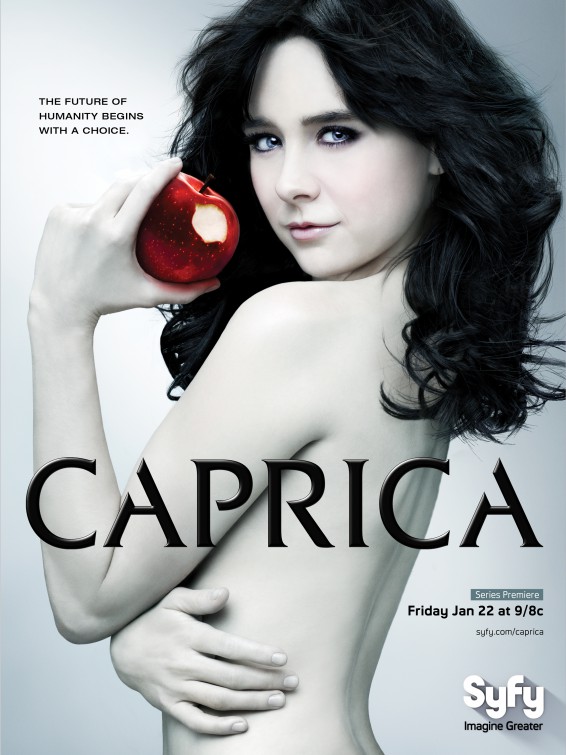
When it comes to visual art or literature, we become suspicious when someone suggests we could interpret someone's hair being dyed as a benediction. We worry about the artist's intent to show symbols, but barely recognize them if the intent is clear. The Syfy TV series "Caprica" had an unclothed woman suggestively holding an apple in its ads, but how many people consciously recognized it as biblical allegory?
This reminds me of the HN discussion on Banksy [1]. Because he works in grafetti, his art is also ephemeral. (Until people decide to go out of their way to preserve it, that is; the same will probably happen here.)
The live performances would still be "rare" just like a unique work of art. Recorded music is akin to a poster or a copy of a statue, it allows many more to benefit from the creativity of the creator instead of just a select privileged lucky few.
My disagreement is with the sentiment of this quote: "The main theme is music being accepted and respected as art and being treated as such."
I don't believe that turning more artistic mediums into investment vehicles is really a path to respect and acceptance. In fact, I think people believing they deserve music for free comes from the acceptance and respect they already have for music; they consider it vital.
This was a tough one to condense into a short title. The point about it being treated as art was more referring to the fact that it would be toured around like exhibit rather than the album itself being art. I agree, all music should be treated as art, but not all music is.
It's not the music, but it's the experience. It's something that's been lost in recent times, for the most part.
I have a large collection (circa 3,000 lps). For me, listening was seldom just about the music. The packging can set the scene. Take a Lemon Jelly lp - it folds out into 6 sides of beautiful hand craft art, before you get to the music.
> He continued: "I don't know how to measure it, but it gives us an idea that what we're doing is being understood by some. And there are some good peers of mine also, who are very high-ranking in the film business and the music business, sending me a lot of good will. It's been real positive.
So Wu-Tang Clan fans in Kazakhstan or Tanzania (or even every country other than the U.S.) will probably never be able to listen to this album...? I guess these will be the people who don't "understand" what Wu-Tang Clan is doing, while only the privileged ones "understand" the concept.
That's artificial shortage, not art (not talking about the music itself).
My perspective on art is a reaction on the elitism of the art scene, so basically my comments are art.
Edit/addition: Honestly, I could have much more respect for this project, if Wu-Tang made it only accessible to homeless people, or only to prisoners, but effectively, they make it only accessible to the riches. I really do like the Wu-Tang Clan, but I am really not impressed by this stunt.
1. This is freakin' brilliant! Its about time someone stepped up and treated their craft like true art. There is only one Mona Lisa. Yes, we have prints all over the place, but there is only one Mona Lisa. And its valuable!
   Now, not all artists can do this. Wu-Tang can. They have been around for a while. They have sold millions. They have a big fan based. So, this is perfect for them. They'll still earn money from shows. Probably more now that each show has something "historic" to offer now that a song from the new album will be performed here and there.

  Great job Wu-Tang!
2. Imagine if the Beetles' White Album or MJ's Thriller, or Eagles Their Greatest Hits, or even Nirvana's Nevermind was a "one print" album. I wonder how much it would be worth. Its exciting to think about.
This goes in line with RZA and his thinking since the Wu's first arrival. A good example is Raekwons album Only built for Cuban linx. It was a released as a purple tape. Not the first colored tape to be released but it became special and know as "the purple tape". It helped that it was a great album but the fact that the tape was purple became a legend within itself in hip hop. The Old Dirty Bastard album became known for having his real welfare card on the cover of his album. RZA has pulled a lot of stunts and this seems to be his biggest and most interesting one.
All of us asserting what Art is or Art isn't are dancing to RZA's tune. This is probably a desired outcome of his gesture. It might annoy some, but it will be quite effective.
They will not, whoever buys it owns all rights to the music and can resell it if they want (Sony, iTunes, Amazon could be buyers for this reason) or could just release it to the world for free.
Where'd you find the info on that, the buyer will get all the rights too? None of the articles i've seen have said that, although it would make sense and I've seen people on discussion forums assuming it. Just looking for a citation.
I don't think you necessarily do, but I'm no expert in copyright law or typical contracts as it applies to paintings.
But I know when you buy a CD you don't normally get the reproduction rights as well, no matter how many or few copies were pressed.
But I agree that it would make sense, as I said. But, I also know "it would make sense" is definitely not a reliable predictor of what's actually going on when it comes to the music industry or copyright law.
And if this is what Wu Tang is doing... shouldn't we able to find them saying so in print? So I'm curious if anyone has.
I'm getting down voted for this so I'd be interested to know why.
You really do get rights for a friend if they have their own copy. So it doesn't cost millions.
I was under the impression that most people agree that music is art. Maybe some of it is bad art, but art none the less.
The idea that there can only be one that has to be toured around to be experienced in order for it to be art is just ridiculous. I'm a fan of Wu-Tang but this is just a gimmick on their part.
Not obviously. I'm pretty sure they could sell 5M copies at a buck apiece. Even in these dark days of record sales, they could probably make more than $5M with mass distribution.
Not at all. Buy for $5M, release on iTunes for $10/copy, sell 715k copies (not hard, they're a big name and got AMAZING advertising dirt cheap from this stunt), give Apple the presumed 30% cut, and every copy thereafter is $7 profit. Just 1.7M copies sold is $7M profit.
But to provide an actual opinion, I think this is extremely cool. We're still waiting to see where the record business is headed next and it's nice to see some outside the box thinking. The only negative in my mind is that this doesn't seem to bring us that much closer to solving the biggest issue in the music business, which is how we can get younger, fresher acts a larger share of the pie.
In any case, I really hope whoever buys it chooses to share the album with the world.
this is one of the worst, most backward-looking, anti-innovative views of art today that i've ever encountered. i'm sure they'll make money on it, but i can't wait until the first rip of this 'unlistenable' album hits pirate bay. as a piece of 'institutional critique', the website/album/company itself is moderately interesting, but barely that since most of what they say regarding contemporary art, exclusivity, ephemerality, and Damien Hirst can be rather easily countered -- due to their tendency toward bombastic or hyperbolic statements without any evidence thereof. let's pay attention to people trying to make the world better and not this pseudo-intellectual, luxury circle jerk.
If innovation is Spotify, where a given artist must have millions of active listeners before they can earn a lower-middle-class paycheck, then I don't see what value "innovation" has to music as an art form. The old music industry as gatekeepers may have exploited artists, but technology hasn't done anything to distribute they wealth; it's only lower the barrier to entry, but as a whole the industry has been devalued.
Hip hop in particular has been the most devalued of all musical genres, and seen as a disposable fad for decades. Wu Tang is doing an experiment here, to put their foot down and say we are artists in the grandest tradition of old. It may be backward-looking, but it's backward-looking with real purpose and conviction, and something that no one else really has the balls to do. So while it may not use the latest technology and scratch that techno-fetigist itch we tend to have around here, it is absolutely one of the most interesting things happening today in the music world, and I wish them all success.
Only last weekend I was at a talk by Professor Elemental, who makes a living doing the kind of niche hip-hop that could simply not have existed ten or twenty years ago. You've got to remember that in the old days many people spent years unemployed or working low-end part-time jobs trying and failing to break into the music industry; there may be fewer superstars making millions these days, but there're vastly more people who, while they may be earning close to minimum wage, are now able to work full-time doing what they love, and I think the quality and variety of modern music reflects that.
I think a lot of the great artists we look back on were more egalitarian than the "high art" of today. Beethoven's late quartets may have been commissioned by a prince for an enormous sum, but he took the time to do the piano arrangement himself so that commoners would hear the correct version. Shakespeare wrote for rich and poor together. Last year I went to an exhibition of Kuniyoshi's works, now regarded as great art - and they were woodblock-printed, stamped out and sold to ordinary folk for the same price as a bowl of noodles.
Define value (specifically in relation to art, or music, or both). Define how something is 'devalued' (specifically to art, or music, or both)). Define who has 'devalued' the 'whole industry'. Define why hip hop has been the 'most devalued of all musical genres'. Then tell me how this gnostic priesthood giving us mere mortals a peek at 'the real thing' is going to give all that value back to hip hop.
There's no technological fetish here, simply a desire to live today and avoid a historical fetish. I don't live in the Renaissance Era or in the 'Swinging Sixties'. It's 2014 and it's sad that this group of people find actually addressing the problem of relevance and value in our day and age too difficult and instead recycle old, problematic forms.
Of all the arts, digital has probably helped music the most. Send me a link to the 'Art' section on the App store.
Does Wu-Tang really need validation from the institutions (the academy, galleries, museums, etc) that they don't already have from the millions of people who listen to their albums and go to their shows?
Do you honestly think that this showing is going to help those artists who want to earn a 'middle-class paycheck'??? Because it seems to me altogether unlikely that most artists will be able to afford to put on a multi-location, state-of-the-art-security presentation like this. C'mon, be realistic.
'Rarity' is only one component of aesthetic beauty. All of the other ones need to be there to give something value. Increasing the 'rarity' to maximum does not an art object make.
Patronage is nice if you've got enough $$$$$$. Hope you get the chance to see the 'holy grail' in your lifetime. Start saving.
Hip-hop didn't suddenly gain qualitative value when the first Rap Grammy was given, and that value didn't jump when they finally televised the award.
But plenty of people still consider similar vehicles of industry and academia as important and authoritative, and that kind of institutional value and respect is exactly what RZA is seeking. I think this only reinforces the questionable authority and ability for inward facing groups like NARAS and AMPAS to anoint their own works as respectable.
So, you're right objectively, but in the context of the systems the public supports, perhaps not.


In reality it's a very smart marketing tactic (they're selling another album with regular distribution btw), and is a piece of performance art in its own right. It raises questions and encourages discussion about the value of art & music in the digital age. This is particularly noteworthy coming from the rap genre which is typically not given enough credit for its role in shaping music trends and pop culture generally. The "art" in question isn't really about the music, it's about framing music as art.
[Edited for grammar/spelling]