This might sound ridiculous, but I really just don't want GM to win. The American automotive industry moved ridiculously slowly towards electric and alternative fuel vehicles, and ultimately is only doing so to sell units on what they perceive as a new niche.
If I'm giving money to a company for a new type of transportation, it's going to be the one committing to the broad goals of bettering humanity, not just capitalizing on someone else proving the existence of a market.
I'm not just behind Tesla, there are other companies like Arcimoto (https://www.arcimoto.com/) that are putting significant effort into redesigning transportation from the ground up.
This is exactly what Elon has always wanted. This is why he open sourced all of their patents. He's more interested in his larger goal of reducing humanities dependence on fossil fuels than being the biggest EV producer in the world. GM's weight could move things along much faster, I don't see how this is a bad thing. Tesla can't possibly supply all the EV's to the world. We need massive production capabilities. In the end the Gigafactories might be Elons most lucrative venture of all.
You're both right. Elon Musk wants other companies to go electric, and it's great when they do. But at the same time, there's nothing wrong with people rewarding Elon Musk (and others) for taking the initiative in transforming the car industry.
In really don't like framing this as winning or losing. Tesla has already won - they've successfully entered the market, they have customers and are making money (plenty of revenue at least, I don't know about profit)
I want electric cars to win. That doesn't happen if Tesla is the only company making them.
More importantly, multiple entrants into the electric vehicle market will drive development in new directions.
If it were only Tesla doing anything of note - with all the best will in the world - the evolution of products would ultimately stagnate as they refined their own particular flavour of electric vehicle.
A monopoly held by a young, interesting company is still a monopoly.
Indeed. I'm happy to see Tesla succeeding, because I love their moxie and feel like the Big 3 have had a forcible perspective shift coming for a long while now, but I have no interest in buying one of Tesla's cars. The powertrain is great but I hate the cockpit and the "phone home" stuff. I am looking forward to future competition which moves into the market Tesla is prying open and offers a car which I might be happy to drive.
I think they won in the sense that they forced the industry to move towards EVs. The Porsche Mission E just got the green light and I believe Mercedes announced they were releasing 4 new fully electric models in the coming years. I expect more auto makers to do the same now that the Model 3 is going into production, piling up preorders and threatening sales of ICE cars in the 30-40k price range.
I'll echo this same sentiment. On one hand you've got what feels like pieces of GM trying to "turn an aircraft carrier around."[1] On the other hand you have a relatively nimble Tesla investing everything it has into making EVs affordable and desirable. And to me it's bleeding over into the consumer market. One just scored $8.5B worth of preorders, and the other shrugs off the prospect of even offering preorders, given the assertion that Tesla will hit 200k preorders and "suck the air out of the room[2]."
> One just scored $8.5B worth of preorders, and the other shrugs off the prospect of even offering preorders, given the assertion that Tesla will hit 200k preorders and "suck the air out of the room[2]."
What is so inherently superior about offering preorders? I'm honestly not sure what point you're making here.
Nothing superior about offering preorders, besides the efficiency of the process (compared to a dealership model). That was me explaining why I thought the consumer market seems to agree. We don't have the numbers on Bolt because they don't offer preorders, but even if only 70% of the pre-orders go through with it, the Model 3 looks like it'll already be the best-selling U.S. car in its segment (small luxury).[1] Will it outsell the Bolt? It'll be amazing and exciting if they go head to head, but my guess is yes.
That makes more sense, though I don't think 70% is a conservative estimate given that 1. the deposit is fully refundable, 2. the widely-touted $7500 tax is due to expire soon after the Model 3 is released. Customers are more likely to preorder something that they believe will have a long waitlist, emphasizing the other two effects.
I can get on board with 70% being too high. It's in line with their previous reservations, and $1k is still not chump change, but it is less than original $5k the Model S reservations went for.
To put things in perspective, right now there are more preorders than the annual sales of the top 3 or 4 small luxury cars combined (BMW M3, and Mercedes C-Class, etc). I can't recall ever seeing this kind of production capacity needed for a single car model, much less a luxury-class car. Exciting stuff.
Yep, I have no trouble believing it will do very well and I'm very happy about that. In the past several decades, the auto industry has only experienced minor evolution in fuel sources with most of the focus on luxury and driving dynamics. It's time to shift into a new environment, and hopefully maintain competition from new players as well as legacy automakers that can turn their ship on course in a timely manner.
Bluntly: it sounds ridiculous because it is ridiculous. Corporations aren't people (no matter what SCOTUS has to say on the matter). None of the people making the Bolt had anything to do with the decisions of the past. This is a silly way to evaluate a company's current behavior.
> I don't think Tesla will be suffering with more people looking at and buying electric cars.
Agreed - Especially if Tesla's selling batteries, operating systems, and/or infrastructure services to other EV manufacturers. Winning by creating and growing the EV ecosystem sounds like part of the plan.
> The American automotive industry moved ridiculously slowly towards electric and alternative fuel vehicles
Tesla is American; this perhaps isn't the best choice of words.
> ultimately is only doing so to sell units on what they perceive as a new niche.
I don't think I'm cynical to believe that every corporation (including Tesla, etc.) that intends on making profits is trying to sell units in a popular niche.
> it's going to be the one committing to the broad goals of bettering humanity, not just capitalizing on someone else proving the existence of a market.
Fair enough, but for me it comes down to supporting the product that best fits my needs and desires, which I think on a societal level can do a better job of solving the most immediate problems. I would strongly consider any vehicle that fits what I'm looking for when I next shop for a car.
One thing I like about the Bolt over the Tesla 3 is the fact that it has buttons for climate control and basic music functions. I'm really not a fan of where your are forced to do everything on a giant touchscreen stuck to the middle of the dash.
I thought I'd miss physical buttons, too, but I don't. I really don't. It's very easy to use the touchscreen in a Tesla. Plus, you do have physical buttons available for climate: they are on the steering wheel (if you decide to chose that option).
Can you safely operate the entertainment system while driving? With physical buttons, I can turn the volume knob or cycle through radio station presets without taking my attention off the road. With a touch screen, you don't get tactile feedback and modal dialogs or different screens can block controls, so you have to divert your gaze and attention to the screen. I haven't driven in a Tesla, so maybe they've figured it out.
Only if you use the steering wheel controls. Despite what others may believe, anything you need to do on the giant touch screen absolutely cannot be done safely while driving.
I wonder, is there actual evidence that physical buttons are better? I don't doubt that screwing with a touchscreen while driving is dangerous, but I have to wonder about the common wisdom that screwing with physical buttons while driving isn't.
Yes, distraction.gov has some research you might be interested in, based on studies of actual car crashes. Note that the key point is distraction, not necessarily touchscreens by themselves. The problem is that it's impossible to use a touchscreen without looking at it, which means you're not looking at the road, and are thus distracted. NHTSA basically says that if it takes more than a single quick glance to perform an action, it's dangerous. This is why most OEMs lock out the touch screen controls while the car is in motion.
Ha! most OEMs like which ones? I've never seen a car where the touchscreen controls are locked while driving. At most I've seen ones that either won't let you use a touch keyboard while driving, or that will let you do that, after tapping a warning message about that being dangerous.
Lexus vehicles used to do this, at least back in 2006, so that you could only operate basic functions but could not set navigation destinations, etc. It was a huge pain, but given the touchscreen-only interface it made sense to minimize distractions. With my current car in one of the best designed control wheel UIs in the industry, I can navigate the menus almost exclusively without looking at the display (given some practice).
I believe it's the law in Japan, or at least they all do it here (in addition to disabling the obligatory built-in TV). Most dealers will pull out the sense wire from the back of the console if you ask them to
Obviously it's possible to meet NHTSA's criterion of operation with a "single quick glance" with a touchscreen UI.
The fact that most manufacturers either do a poor job of making this happen or don't bother trying at all doesn't entitle you to condemn the entire technology.
That's a fair opinion, but I have to disagree. Do this test yourself: grab an iPad and then setup your phone camera to record your face. Now look forward, then do a fairly straightforward task on the iPad like thumbs upping a song in Pandora, then look forward again. Check the video and see how long your eyes were on the screen. Do the same for a few other tasks as well. Now calculate how far your car would have traveled during that time at freeway speed.
For me, it's between 1.5 and 2 seconds, or around 100 feet of travel. If that really doesn't seem dangerous to you then I suppose it's your life, but I don't want to be driving anywhere near you.
Touchscreens can meet NHTSA's guidelines if they are used for presenting information. However, it's very difficult to make them safe to physically interact with while driving, short of reducing what's shown to just a few giant buttons. And my original point was that Tesla doesn't even try on this front - the center screen is jam packed with information and small buttons that require quite a bit of attention to operate effectively.
I appreciate your stance and also hate these kinds of safety features from a usability standpoint. However, keep in mind that they're not there just for you - they're there to keep the drivers around you safe. If you're messing with the navigation controls and smash into the car in front of you, a completely innocent driver is suffering because you didn't want your car to babysit you.
Also, for what it's worth at least two of the OEMs I've worked with are in the process of adding passenger-detecting tech to the seats and head unit so that if someone is in the passenger seat, the full touchscreen controls will be unlocked.
> If you're messing with the navigation controls and smash into the car in front of you, a completely innocent driver is suffering because you didn't want your car to babysit you.
No, it's not because the car didn't babysit me, it's because I messed with the controls.
I have lots of way to crash into people, the car can help me avoid it, by knowledge and help, but not by restrictions.
If you put in passenger detecting tech I'll be sure to activate it permanently if I buy that car (or not buy the car if I can't).
They already have passenger detecting tech anyway - it's a weight sensor, it makes the seatbelt light beep. I'll probably have to remove the seatbelt beeper though, since it would activate constantly thinking there is someone in the seat.
And this is why you should not add such lockouts - people will disable them, and remove safety features in the process. And in any case machines are not smart enough for them to be in charge, there are too many special cases and failures.
I was going to say the same thing. I know where the buttons are, so I can just feel for them without looking away from the road. Can't feel your way around a touchscreen.
My Ford uses Fitt's Law to good effect. The big functions (phone, audio, navigation, climate) each have a button in one of the four corners of the screen. You can slide til you feel the bezel and press.
That still doesn't help with subfunctions like picking a radio station, etc. but voice control and steering wheel buttons pick up the slack. I still miss well-placed physical controls.
That's a neat trick on Ford's part. Maybe car touchscreens need a different interaction language. Instead of touch being the primary action trigger, touch would only change the selection (and produce some tactile/haptic feedback as the selection changes) and a harder press (with its own distinct feedback) would actually activate the function. By dragging your finger around the screen, you could feel out the layout of the controls.
I wonder how many drivers actually learn their controls that well. Anecdotally (which I realize is worthless, I just don't have anything better to go on) I see a lot of drivers taking their eyes off the road to look at physical buttons, and I was even in a crash where the driver just drove off the road while fiddling with the radio.
It probably depends on the design of the physical buttons.
I've had cars where the physical buttons were sliders and I usually had to glance at them, especially when there were multiple slides parallel to each other (say for fan speed and hot/cold mix). That's because the part that I had to interact with would be in different places, depending on the current setting. It would require enough feeling around to make sure I had the right control that it would probably be more distracting than a quick glance.
My current car (2006 Honda CR-V) uses round buttons for many things. I do not need to glance at them. The fan speed control is always in the same place. The hot/cold mix control is always in the same place. The air routing control is always in the same place. So, if I want to change fan speed, for instance, I reach to the same fixed location every time, and then rotate the knob clockwise or counter-clockwise depending on whether I want to increase or decrease the fan speed. Unlike with sliders, the current setting does not affect what I have to do to find the control or interact with it.
It's not just remembering where the buttons are, it's the ease of using them. I don't have to remember the exact position of every button. I can feel for the button if I miss it, I can feel whether I'm fat-fingering other buttons and adjust, and I know when I've successfully pressed the button. This all adds up to me not looking at the dashboard.
In general aviation aircraft the important levers/buttons are all explicitly sized/shaped/coloured differently to avoid confusion. The last thing you want to happen is come in for landing, reduce your throttle and discover that you've accidentally pulled the mixture/cut-off to kill the engine.
Fortunately that's the kind of mistake you only make once ...
Are you seriously asking if muscle memory is a thing? Because yes, it's absolutely a thing and anyone that's done much with interfaces would know this.
It should be obvious that keeping your eyes on the road (you learn to use volume and HVAC controls by feel pretty quick) is less dangerous than looking down at a screen.
I'm really not convinced that having your eyes on the road and your attention on your fingers is safer than glancing away. I think it's probably right, but I'd like something better than just "it's obvious!"
Attention is a funny thing. Talking on a phone with your eyes on the road can take quite a bit of our attention. Its not about the eyes - glancing here or there is what we do all day. Its the mental model in our head - more than one is hard. Imagining the person on the other end of the phone call is a mental model - and it can push the 'road model' right out.
So it depends on how much cpu it takes. Not just where we're looking.
My Dodge Charger has touch screen control for most functions (but not all). I have not found any trouble operating it while driving, but I'm sure there is a big difference between finding buttons on an 8.4" touchscreen vs 15" or larger.
I have a 2014 dodge charger. I absolutely abhor the touch screen for just about any function. It's painfully difficult to use without looking as too many buttons are close together and you have to really lean over to operate most of them. I feel it was poorly designed. (Just like having the cupholders behind the shifter) I cannot operate the touch screen reliably without looking at it and even while looking it's still difficult. I'm glad it still has physical controls for most functions although even those aren't very good (it's hard to feel the difference on some of the buttons).
The BlackBerry Storm had a haptic system, but it didn't seem to catch on, and it also did not have separate buttons so was not as easy-to-use as a menu with conventional buttons.
>Relatedly, does anyone have a sense of how far out we are from consumer-grade haptic-feedback touchscreens?
Well, they had them in Star Trek: The Next Generation. While not actually shown close-up in the show, the technical manual explained that the flat touchscreens actually provided tactile feedback, and of course were reconfigurable.
How'd they do it? Simple: according to the technical manual, they used miniature force fields.
We're not very close to developing any kind of force fields right now....
On a more serious note, I believe there's been some research into using ultrasonics to provide some kind of tactile feedback. And of course lots of phones now have vibrating feedback.
Is there a physical button on the steering wheel to pause music playback? I often need to pause audiobooks or podcasts and I really miss it when I don't have a physical button to do this.
Yes, play/pause, volume, and next/previous track are all accessible on the steering wheel. There's also a set of menus on the instrument panel you can navigate entirely with steering wheel buttons, which allows you to control the sunroof, climate control, and other essentials.
The climate controls are always shown at the bottom of the screen, independant from what else is going on. Also, most of the time the UI is split into two tiles which show different "apps". So operating one tile does not remove the map from the other. Also, you can display a mini-map on the drivers dashboard screen.
I tried to reply to you but I'm on my phone and accidentally hit something else, to get back out I tried to hit the back button but that hit yet another link. Aren't touch screens fun!
If it doesn't exist yet in the latest car models, I'm sure it will soon: voice-automated controls. Should be pretty trivial to do basic things like climate control via voice, and seeing as a car is a private environment (my biggest gripe with talking to my phone in public), I think it'll quickly overtake physical controls as the preferred mode of use.
Voice activation in cars has existed for ten years, and it's been a running gag for ten years how poorly it works; see e.g. Top Gear: "Call Richard Hammond" - "Deleting contact info".
In "Car Guys vs. Bean Counters", Bob Lutz describes the day he killed voice input for GM cars in the 1990s. He tried the demo, and decided that working through the voice menus was just too clunky. So he killed the project.
Party true. But don't be surprised when Tesla revamp their user inputs with Siri-like interface. It's easier to go from touchscreen to voice then nobs-&-bolts to voice. The later is few layers closer to the traditional interfaces.
The steering wheel for Model S and X has buttons for climate control and basic music functions, not to mention phone functions and some other functions. Why do you think the Model 3 will lack steering wheel buttons?
The Bolt (if the numbers $30k and 200+ miles) means that a company that isn't Tesla can build a car that is competitive at least on range/price with the Model3.
I thought Tesla had an advantage on battery tech and/or production that meant the competition had to produce vastly inferior (on range) cars, such as the leaf/i3 etc.
If GM can produce a 200+ mile range EV at this cost, then Toyota, VW or BMW should soon be able to produce a good 200+ mile EV at a competitive price.
Tesla does not have and never had any battery tech. They use off-the-shelf Panasonic batteries that are exactly the same ones you put in flashlights[1].
Tesla made one major innovation. They realized that people will buy an electric car for $100,000. That's really it! They have an attractive and very good car, but it is market innovation that is Tesla's essential advantage.
Finally someone talking some sense. The whole Elon cult of personality really clouds the discussion. (though don't get me wrong - I think he's a really cool guy)
The Leaf has been around for a lot longer than Tesla and isn't just a fantasy luxury item only the very wealthy can afford).
In my personal opinion I think their approach of working directly at the mass market price point will pay dividends in the long term.
The free supercharging stations I think is a gimmick. Nothing is free - you get what you pay for. The price of that luxury is folded into the price of the car. I could be wrong - maybe it's a clever enough market tool to get people to pay up - but it'll probably be more practical for most people to rent a car for that long weekend drive.
"The free supercharging stations I think is a gimmick."
"Free" seems mostly to be a matter of perception. Here is Australia, a lot of merchants, especially small grocery shops, charge you an extra 1.5% on purchases with credit card or have a minimum amount, say $10. As a customer, that bothers the living hell out of me. I am absolutely happy if they increase the prices of every item they have by 1.5% and don't bother me with credit card charges.
I personally prefer to deal with a business that deals with complexities of running their business themselves, instead of passing it onto me, the customer.
I imagine you've read that Tesla uses 18650 cells in their batteries. And it's true! But what you may not realize is that 18650 is just a size and shape. 18650 just means the cell is 18mm in diameter and 65mm long. Tesla uses these cells, but the guts aren't the same as what you'll find in something from Amazon.
Many sources online say those are the batteries that Tesla uses. Panasonic NCR18650Bs, and before that, Panasonic NCR18650As. Same as you buy on Amazon.
This guy did a teardown[0] and did a single-cell discharge test and got a little under 3Ah.[1]
Of course they're Panasonic. Tesla's battery factory is really a Panasonic cell plant, with Panasonic employees, plus a packaging plant which assembles the cells into Tesla's packs.
What sources? A brief search turns up some speculation but nothing that appears at all informed, although I certainly could have missed it.
I'm not surprised capacity is similar to what you'd find off the shelf, but I'd expect chemistry to be tweaked to account for the different environment and much higher need for longevity.
There has never been any indication they are using anything other than standard cells. These cells are produced for loads of industrial and consumer uses. The chemistry is well known.
I'll go out on a limb and call BS on this. An Amazon link doesn't do a good job saying Tesla has no battery tech. That I'm aware of, Tesla has at least designed some thermal management around their battery cells, to ensure optimal operating temperature (and extending battery lifetime, compared to air-cooled batteries like the initial LEAFs). http://insideevs.com/wp-content/uploads/2016/01/bltbattrygea...
Other cars at similar price points were doing the same things years, sometimes a decade ago. Tesla's innovation was marketing them to techies on the Google self driving hype train rather than as safety features for the country club set.
Which ones? I don't mean just staying in your lane. The car I was in stopped at a red light (technically just following the car in front of it, which also stopped). Though I haven't researched the history of this feature.
As I understand it, Tesla Autopilot is a collection of these ordinary luxury car features (lane keeping, adaptive cruise control, environment sensing/prediction and collision avoidance, integrated navigation) that with branding that recognizes them for what they are: the foundation of self-driving technology.
Yes, Tesla would love you to believe you can just slap these Panasonic batteries straight off Amazon together in order to power a car for a few hundred miles. Maybe this is why they stopped filing patents, it's better to get comments like this.
They must have done something right, because the Model S was deemed "the best car ever, by a huge margin" by several of the leading automotive journals. Is the source of all those benefits the electric drivetrain?
Note that the Bolt's $30,000 price is after the Federal tax credit, while the Model 3's $35,000 price is before the tax credit. The Bolt's real price is more like $37,500. Still close enough, and there's the additional complication that Tesla will run past the end of the tax credits well before GM does at this rate, but not quite as cheap as it might sound from the PR.
Average Tesla pre-order price was around 42.5k (pre-rebate) yesterday. It will be interesting to see what the average is with all the added orders. EDIT: No info on average yet, will still be interesting to see what that number will be
We'll also have to see how the options wind up comparing at that price point.
Elon Musk said that he expected the average configuration to cost $42,500. There is no actual average price yet, as no options or pricing has been announced yet beyond the $35,000 base price, and nobody has actually been able to configure an order, and won't for a long time.
Can you give source for that $42.5k number? I remember seeing a number like that, but I believe it was describing the average price later down the road, when people choose their additional options and click 'buy' on the real thing. https://twitter.com/elonmusk/status/715934657720639488 The base price seems to be $35k.
The Tesla won't get a tax credit because Tesla's won't have one by the time the Model 3 ships. That's why Tesla never quotes a tax-credited price. It is fair to compare the after-credit price of the Bolt to the no-credit price of the Model 3.
Look at externalities when you consider selling price: Tesla sells pollution credits to outside companies, which they can use to finance their operations to some degree. For legacy OEMs like GM, CAFE standards mean that selling 1 Bolt EV lets them sell several Cadillac Escalades which have a very nice profit margin.
Disclaimer: I work for GM, but not on this product, and any opinions are my own.
Also, Tesla will start production and deliveries in late 2017. That means most customers might expect to get their cars in 2018 but mostly likely 2019 and 2020.[1]
Tesla is in a bit of a bind. The model 3 may have been inconveniently too popular. If Tesla wants to deliver those cars in 2018 they may have to over build their capacity. The pre-sales will probably be in the 300K-350K range. That is equivalent to the Honda accord in popularity.
Tesla is either going to have to hope for sustained demand at that level, build out a massive production capacity or spread deliveries out farther.
I don't know how this will end up shaking out. They will have competition in 2018 onward. Probably from multiple OEMs. So I guess the next 2 year is really going to be the big test for Musk to see if they can switch from plucky upstart to Big Auto. More than a few companies have been destroyed by too much demand too fast.
If you believe the intended positioning, the Bolt and the Model 3 are cars with EV power plants, but intended for different segments. The Model 3 is intended to be positioned as a premium vehicle (BMW 3 series, etc), while the Bolt seems to be similarly positioned to the Prius. So, its not a winner-take-all proposition.
I could be wrong, but judging by the photos, the Bolt does not appear to compete with the Prius: the Prius is much larger.
The Bolt looks like it's maybe the size and shape of a Honda Fit. I'm pretty sure Priuses (the regular kind) have quite a bit more interior room than that.
The length is a pretty crappy way to compare cars; but that alone shows the Bolt is significantly shorter. A better measure is the interior volume (for instance, a car and an SUV from the same mfgr will frequently share the same chassis (the SUV is a taller derivative but with same bottom stampings, suspension, engine, subframes, etc.), with the exact same wheelbase/width, but the SUV clearly has more interior volume).
If you compare your link to the Prius (http://www.toyota.com/prius/features/weights_capacities/1223...), you'll see the Prius has larger dimensions for passengers (for instance, 1st row legroom is 41.6in Bolt, 42.3in Prius; 1st row hip room is 51.6in Bolt, 53.4in Prius), however less overall passenger volume (52.2 + 42.2 = 94.4 cu-ft Bolt, 93.1 cu-ft Prius, unfortunately the Prius doesn't list separate 1st vs 2nd row volume, but I suspect the Prius wins because the Bolt beats it in rear-seat legroom 36.5 vs 33.4, so the Prius is sacrificing rear-seat room), but the Prius has greater cargo capacity by quite a lot: 24.6 cu-ft vs. 16.9. (There's also a special "Two Eco" Prius which has a whopping 27.4 cu-ft cargo volume for some reason.)
Overall these aren't that far apart, but it does seem to me the Prius is a generally larger car, with more cargo space and a more spacious front seat but with crappier rear-seat legroom.
Also, the Prius has a much longer wheelbase (106.3 vs 102.4), and its height is much lower (58.1 vs 62.8). That explains why the Bolt gets similar volume from so much less length: it sits up a lot higher, sorta like a mini-SUV. Also, the Bolt's page even makes note that the EPA has no category for "crossover", so they call it a "small wagon", meaning GM itself would prefer to refer to it as a crossover. The Prius has never been called a crossover; it's clearly a hatchback car.
It is totally up to the agend of the other companies. Theoretically, they should be able to since tesla has open sourced all its patents but I don't think many companies want to do that. EC cars are still a niche that only very few people drive. And it still requires tons of R&D which might not be worth it for the other companies.
What is really going to be interesting is how well other car companies can build EC cars. I personally like the look of the tesla model 3 way better and at a similar price point, it is a no brainier to get a tesla for me (if I had the money). Also, I'm really interested in autonomous driving and tesla seems to be far ahead (I know lots of companies are catching up but autonomous driving is still in the higher end models.
Just to nitpick: Tesla is, in fact, not at all far ahead of other auto manufacturers in terms of autonomous driving tech. At CES this year, pretty much everyone showed off significant achievements in their own self-driving cars, including fully autonomous road trips. Autopilot is basically the same as adaptive cruise control + traffic jam assist, both of which have been available in some vehicles (Audi comes to mind) for years.
The difference is that the bigger OEMs are extremely wary of enabling these features in cars and getting into lawsuits as a result. Tesla has shown repeatedly with things like a giant touch screen that flaunts NHTSA guidelines that it just doesn't care about potential legal problems, and is more than happy to put somewhat unproven tech in the hands of drivers and hope for the best.
I think you're right in saying that anyone could do it, but in my opinion, it depends on the economics of the battery packs. If we truly are seeing the costs come down, as Tesla hoped and GM seem to be showing, then it'll be exciting to see if any other players appear. GM reportedly scored an insane price of $145/kWh for their battery pack production http://insideevs.com/lg-chem-ticked-gm-disclosing-145kwh-bat...
Why does every non Tesla electric look so ugly? And why does every article written by supposedly competent journalists not mention how ugly literally ever other electric car is when they discuss tradeoffs?
It could very well be a close race between 2-5 electric cars. But attractiveness could be another reason 1 is the big winner.
Nobody has made a good looking car since the 60's. The wind tunnel testing has turned them all into lozenges. When I rent a car I have trouble finding it in the parking lot, as they all look the same.
I admit that modern cars are better in every way other than looks. And it is amazing what 60's cars could do without a single transistor. But dang, I do like the way the 60's cars looked.
Every man to his taste. I personally think most of the 60's cars looked all the same, squared box that looked like a coffin on wheels (and drives like one too), unless you are talking about unique cars such as shelby cobra, gt40, or some ferrari like 250, the rest of the "regular" cars all looked the same. Same thing is happening today, most of the mainstream cars look alike, but if you are willing to spend more - then you have cars like maseratti, aston, lambo, ferrari, that most certainly don't look alike.
Watch the clip and then say that the 68 Mustang and Charger looked like everything else on the road :-) and they were not spendy cars. The Charger, in fact, was made to appeal to the weekend blue collar drag racer. It was cheap, fast, and easy to modify.
And, of course, a couple years later the E-bodies appeared from Chrysler. They were so damned good looking that Chrysler revived the style recently.
I had a 67 Mustang in college, and have a 72 E-body today. I'd get a 68 Charger if I had garage space.
Ronin has good driving sequences, but the cars aren't cool. The two best movies for cars are Bullitt and Grand Prix. Everything else is way, way down. Too bad, actually. I don't understand why Hollywood simply cannot make good car movies.
Edit: I forgot to add in the original "Gone In 60 Seconds", not the pathetic remake.
It went from being actual wide-shots of cars chasing each other, to short clips of stunmen driving, spliced with reaction-acting of actors too valuable to be in moving cars.
It's like that for most action sequences, I recently saw a Jackie Chan documentary that has him explain the differences of his action shots, and the things to be mindful of to make them be more believable as to be of one long full sequence.
> And why does every article written by supposedly competent journalists not mention how ugly literally ever other electric car is when they discuss tradeoffs?
Because unlike other things they discuss, styling is 100% subjective. What would be the point of the journalists talking about their own tastes when you are going to make your own mind up about the styling anyway? On top of that, some cars look better in some colors than others, so there's more personal taste at work there.
Personally, while I really like the Model S and Model X, I found the Model 3 prototype's styling to be kinda meh in the three colors they've shown. I might still get one but it won't be because of the styling.
FWIW, I currently have a Nissan LEAF in blue and I think it looks really funky and fun. But it is "abnormal", so it's polarizing. Most EVs so far are styled in a polarizing way. It just so happens you seem to fall on the "I don't like it" side of that spectrum.
I generally take this as a bad sign. Full-EV cars are substantially different in their requirements from ICE engined cars, not taking advantage of that just hobbles them.
For example, the Tesla 3 pushes the passenger space forward and backwards to fit more people in the same space. It can do so because there's no big, heavy engine up front. Starting with a traditional car body and adding electric is just going to waste space.
Yes, but internally the eGolf is not quite the same structure as combustion engine models.
Also the most iconic full EV car, Tesla model S, looks very much like combustion engine cars. In fact, from distance it's hard to tell it apart from a Ford Mondeo, the symbol of mediocrity (at least in the UK) which is also a fine and nicely contoured car.
The more distinctly formed EV cars, on the other hand, look about as weird as Granma Duck's 1916 Detroit Electric; they have some futuristic aerodynamics but on the desirability scale, they seem to suck.
The externals are driven by aerodynamics and should be converging generally.
The interior is where there's a bunch of new rules in play, with the front mounted ICE being replaced with a floor of batteries and between wheel motors. That directly allows Tesla to be amongst the safest cars ever built, and to fit more passengers, more comfortably than similarly sized ICE cars.
Tesla needs those advantages to balance out initial shortcoming of EV cars, at lower mass-market price points that becomes even more important.
Except it has a range of 75 miles with a 3.5 hour charge time, making it a completely useless waste of money for most people. The problem is that other car manufacturers are just sticking EV drive-trains into their existing cars, and hoping for the best. It's absurd.
The reason that the Prius and the entire SUV category have sold so well is that more people care about utility than appearance. The Bolt was designed to support large cargo when necessary, and this is something that I have looked for in past purchases. http://media.chevrolet.com/media/us/en/chevrolet/news.detail...
I've also wondered this. I find it hard to believe that a designer of an electric car, other than a Tesla, can honestly think they styled a beautiful vehicle. If I were to give them the benefit of the doubt then I would say that what they initially sketched on paper and what was ultimately produced was the fault of layers of institutional bureaucracy each meddling with the design until it looked nothing like what was envisioned.
There was a time when most programmers did their own art. This is reminiscent of that time.
Market segmentation. There's no good reason cheap cars have to look worse than expensive cars, except that selling a cheap but expensive-looking car would cannibalize higher-margin luxury car sales.
No competitor breaks this cycle because all major competitors for middle-class cars also have luxury divisions.
I imagine that you are right, regarding the layers of institutional bureaucracy. It's probably a mix between: "It needs to look like a Chevy", "It needs to look futuristic", and "It needs to look like other electric cars so that people know that it's electric". It also looks quite similar to the BMW i3 electric car which is inline with Chevrolet's recent push to sell luxurious looking cars at cheaper prices[1].
I second these comments. It feels like they want to put A-grade designers for electric cars. Same can be said for BMW i3 and (NotSo)SmartFor2. They are joke to say the least.
One theory is that electric cars look distinctively ugly because their owners want them to stand out as an eco friendly car. The Prius tail is an example of this.
I think that it limits how mass market you can go, however it seemed to work for the Prius.
Absolutely. Tesla created what i would call "regular car-looking cars". Btw, when there is no difference between a diesel engine car and a gasoline version of the same car in terms of looks, how come an electric car has to look different ? Don't the designers think for a minute, or do they suddenly lose all their aesthetic sense while designing electric cars ?
Actually, in its price class i think the model s isn't a particularly nice looking car. It looks cheaper than its price tag. But you're right that car makers have the unfortunate habit of making amazing ev concepts and turning them into ugly production cars, as if they assume that someone who buys electric has no taste and must be publicly shamed for it.
Well, i have to disagree. Model S looks great ! well, it might not look as great as an aston martin or a maserati, but it is pretty darn close. Elon mentioned it a lot of times, it is easy to build a good looking car, but not some thing which is functional & performant & good looking, all at the same time. One might not be impressed by the simplistic design of the interior, but Model S is one heck of a car !
It's because the companies have different goals. Tesla is just trying to make a good car. Others are trying to differentiate. (Hint: the easiest way to something look different is to make it ugly.)
I don't find that car to be particularly ugly. It looks like a normal car to me. Looks are subjective, so it's not really interesting to write about them.
A guy near me has a Nissan Leaf that I see driving around multiple times per week. I don't agree that it's "ugly" at all - it looks like every other car on the road. If I didn't know what it was it wouldn't even register.
He said the traction control engaged when accelerating out of some corners. That may be the result of high torque or a badly designed car.
I really hope they do not make the mistake of making this a front wheel drive car. A front wheel drive car when combined with a high torque electric motor is basically asking for trouble. The high torque applied to the front wheels screws up the steering, makes it imprecise, causes understeer, or in extreme cases even the loss of steering control.
This was a problem with the Chevy Spark electric. It was very fast but, when you slam on the gas, you lose all steering input and the car tends to veer to the right and there is nothing you can do about it. (except of course to let go of the gas, so you can get the steering back).
Electric engines are so small there is a lot of flexibility designers have as to where to place them. It would be a huger mistake if bold designers placed them in the front.
I'd expect overpowering the front wheels is much less dangerous than the rear, regardless of engine type. Front wheel is pretty much the norm now in the vanilla car market, partly because they're safer.
Also, just for driving dynamics, front wheel is better for day-to-day stuff. More predictable, easier to correct, easier to control on rough or slippery surfaces, ... I'd rather drive a front-wheel car without traction control than a rear wheel drive one.
Maybe I'm missing something here, but a small family car like this should be front-wheel drive. Also, front wheel can be pretty sweet in a small car with a peppy engine.
Front wheel drive is the norm for small cars because it is cheaper and more space efficient. Furthermore, the problems with front wheel drive a proportional to the ammount of torque the car produces. A lot of small economy cars are designed not to be very powerful, so front wheel drive is not much of a problem.
But small cars that are designed to be performance cars from the beginning tend to be real wheel drive cars. See for example, the mazda miata, the toyota mr-2, the prosche cayman/boxter, the alfa romea 4c, etc. If you look carefully at powerful small cars, you will notice that the ones designed from the ground up to be performance cars tend to be real wheel drive, the ones that are designed merely as an upgrade of a less powerful economy car are often front wheel drive.
The cost efficiency and space benefits of front wheel drive are mostly related to the particularities of internal combustion engines. For an electric, these are not that much of an issue.
And the steering problems of powerful front wheel drive cars are very real.
Torque-steer is a packaging problem; the difference in half-shaft lengths between the left and right hubs in most transaxle setups causes an uneven application of torque. If manufacturers choose to employ them, there are solutions to the problem:
- Many AWD vehicles, and many 2WD Audi and VW cars, use a traditional longitudinal setup with equal-length shafts driven from a transaxle mounted in the rear of the engine.
- Power-assisted steering can be employed to counteract torque-steer by receiving the current torque application as input.
Like you said, an electric vehicle has neither of these problems, because they do not have to package a transaxle to one side of an ICE-driven crankshaft. There is no reason to believe that the Bolt exhibits torque-steer, and nothing in the article corroborates this suspicion.
The other benefit of FWD vehicles is that understeer is much, much easier to recover from than oversteer. RWD vehicles tend to snap-oversteer the other direction when the untrained driver lifts off the accelerator too quickly; a common occurrence in YouTube videos of Mustang and Corvette conventions. Understeer can easily be recovered from by lifting off the accelerator in the same way, putting more weight on the front wheels and increasing available traction.
It is not only a packaging problem, there is a fundamental physics problem that cannot be avoided. When power is produced by the front wheels they create a force between them and the ground. This is the force that causes the car to accelerate forward. But this force also puts pressure on the stickiness on the forward wheels and makes them want to slide.
If you apply a lot of torque you start getting microslides, or momentary losses of traction which reduce the front wheels ability to steer the car and cause torque steer and understeer.
A lot of the problems of oversteer you see in youtube videos and the like are really just very extreme cases. I doubt the Bolt, even with its electric motor, will have as much torque as a the souped up mustangs and corvettes that you usually see at those conventions.
In general, for the same amount of torque, oversteer is much better than understeer, because it does not cause nearly as much loss of steering (and the little loss it causes usually goes in the right direction, i.e., helping you turn). Oversteer is the result of the rear wheels sliding, and the rear wheels are not as crucial for steering as the front wheels. Thus microslides in the rear wheels will not cause such a loss of steering authority.
I remember i test drove a 200 hp front wheel drive audi, and it had noticeable understeer and torque steer problems. Then i test drove a 300 hp rear wheel drive infiniti, and it had no oversteer problems even though it had much more horsepower and torque.
Of course you can always cause dangerous situations with oversteer, but you need much more power and torque to do it.
What you are saying, in simpler terms, is that the traction circle in FWD vehicles is limited by the fact that the same contact patch must handle both acceleration and steering. And that's true. This makes FWD setups prone to understeer. Everything you describe services this truth.
What's not true is that torque-steer is caused by lots of torque overcoming available traction. The same torque is applied to both wheels in the absence of unequal-length half-shafts. You might induce understeer with the application of torque, but it will not induce a force which changes the steering angle moreso than the same understeer situation would induce on a RWD vehicle, and that's a function of the suspension setup, and mostly dependent on caster angle.
Thus I submit that torque-steer is not an inherent flaw of FWD design, but of the most common packaging design in ICE vehicles. It's easy to conflate the two.
I wish it caused oversteer! The reason front-wheel drives are so pathetic to drive is because it causes understeer, but which is what also makes them safer than rear-wheel drives. I have an e-Golf with loads of torque at the front wheels, and I can spin the tires easily whether going straight, or in a turn (and coming off of speed bumps). I so wish the car were rear-wheel drive (edit: in the sense that I could have a rear-wheel drive; I don't actually want a mass-production e-Golf to be rear-wheel drive).
I have yet to drive a front-wheel-drive vehicle that cannot exceed available traction under wide-open throttle at low speeds. I used to own what was once the cheapest car in America (the fourth-generation Toyota Tercel); its measly 94hp could easily perform burnouts when dumping the clutch at high RPMs.
In fact, I would suspect something to be entirely wrong with a car lacking this capability. A vehicle with even less torque than that Tercel would have problems passing, driving up steep grades, and maneuvering slippy situations. No American consumer would purchase such a car (if this were the 1970s I would not be making the same statement).
If you can't peel out with a standard something is wrong or broken. Rev it up, dump the clutch, listen to physics working it's magic. The bolt and pretty much every economy car sold in the US comes with an auto. You usually need a wet road to peel out in a 90s tercel with an auto and if it had some sort of traction aid (limited slip, or even a detroit locker for sh*ts and giggles) you probably wouldn't be able to peel out with an auto at all (well, maybe with a neutral drop you could, but that doesn't count).
and BTW, a Prius meets all the criteria you described. They actually have a lot more "go" in the power-train than they give the driver access to since they're trying to put a lower bound on fuel economy. They have about the same passing power at low speed as an 80s pickup, but the 80s pickup will be a lot faster off the line (gearing and flat torque curve) and be worse at highway speed (bad aero) Nobody notices this stuff because very few people actually floor it.
FWIW they give most economy cars a really tall 1st gear to make it harder to peel out from a stop (e.g taking a right turn into traffic in the rain) and I expect the bolt to be no exception. Consequently they're very slow off the line.
It's harder to apply the immediate sort of torque needed to do burnouts in automatic transmissions (in this case, transaxles) because they have low-end-torque-sapping devices called torque converters. These are opposing arrays of fins bathed in automatic transmission fluid; when power comes in the input side, the input fins spin, forcing fluid into the output fins and causing them to spin, and finally delivering torque to the input end of the transmission (transaxle).
Direct-drive electric vehicles, just like standard-transmission ICE vehicles, have none of this nonsense, which leads to part of the "legendary torque" association (the other part being the flat torque curve).
So being alarmed at the ability of a vehicle without a clutch or stick-shift to activate traction control when flooring at low speeds is not a cause for concern, nor is it damning of the Bolt's design, nor is it damning of FWD electric vehicles as a class.
He said the traction control engaged when accelerating out of some corners. That may be the result of high torque or a badly designed car.
Probably high torque. I can cause tire slip by stomping on the pedal in my Fiat 500e. You just have that much torque and it's available instantly. The low rolling friction tires probably don't help. However, the good news, is that electric acceleration is instantaneously responsive, so you can have the driving pleasure of optimizing how much acceleration you can get away with.
It's not a sports car, it's a commuter vehicle. Understeer is safer, since it's less likely to get an inexperienced driver into trouble. Yeah, it's stupid if a little car like that engages traction control when accelerating, but if the wheel is at full lock, it might just be a product of the suspension design and the differential design, and it'll probably be fine for all the people that commute in it.
Large portions of people that live where it snows will only drive a front wheel drive (or all wheel drive) vehicle. My first car was a $400 rear wheel drive beast, so it doesn't bother me - but a lot of people think I'm crazy driving my (rear wheel) Camaro in the winter.
Thanks for this. I was wondering what planet the upper posters were from, extolling the virtues of rear wheel drive -- then I remembered other people don't live in a land where half the year has frozen rain, ice and snow.
Rear wheel drive was great on my '84 Ford Ranger when I needed an excuse to skip school -- couldn't get it up my parent's driveway, sorry!
My first car was a Camaro (V-8 350hp '79 or so). I bought it when I was going to work in New Orleans for a few years. Then I went to grad school in Ithaca NY. I used to joke that it skidded when there was a forecast of snow.
Ever watch one of those YouTube videos of RWD cars on proper winter tires out-tractioning AWD cars on summer / all-season tires?
I survived the Atlanta snow storm a couple years ago turning a 35 mile commute into 50+ miles due to detours in a BMW on summer tires... The only confidence I felt was that I was going to end up stuck somewhere, but adjusting driving style to conditions goes a long way and then it's just the luck of not getting hit by someone who didn't.
Traction is traction. No matter how a car handles it'll handle the same way on every surface, the traction threshold will be different. No matter which wheels are driven turning and braking is the same. In a straight line it front/rear doesn't really matter. RWD will slip out, FWD will just spin and in either case the driver (the one's that aren't the worst of the worst) will lift off the throttle before anything bad happens. In a modern car traction control will just work it's magic and you wouldn't even know. Ditto for turning from a stop. The driven wheels are irreverent to turning while slowing. The problem is in a long sweeping turn that the driver wants to accelerate out of, like a highway ramp. FWD will just plow straight into whatever is outside the turn. RWD will do the same thing but the car will be oriented differently. No matter which wheels are driven if you break traction in a turn you're going to go wide, better hope you've got enough space to correct it. The safety advantage with understeer is that if you do something monumentally stupid (e.g. drunk guy takes highway off ramp at 90mph) the front of the car with all it's crash test safety will be between you and the consequences of your actions.
The RWD vs FWD thing is more of a "what I don't know can't hurt me." The novice won't notice a little bit of understeer whereas anyone will notice a little bit of oversteer and everyone who can't apply a reasonable amount of self control to their right foot should bend over, grab their ankles and spend their money on some snow tires.
The Miata club of Alaska was featured in one of the car magizines (I forget which) and they basically said "Everyone that thinks we're insane for driving these cars year round in Alaska should know that the design characteristics that help maximize use of available traction in the dry don't stop working in the snow."
You are overlooking weight distribution. The traction of a given tire on a given surface generally increases as the weight on that tire increases. Given two otherwise similar cars, one with the engine over the drive wheels, and one with the engine over non-drive wheels, the former will generally have an advantage in snow, especially on hills.
Agreed, but if we move the conversation back to electric cars - they might not have the same weight distribution, right? The Tesla uses direct drive on the wheels (the Leaf seems to use a more traditional "one motor in the front" configuration though), and then you have the huge battery spread out over the floor
Thing is, in the places mentioned, there aren't hills like we have where I live. Makes a huge difference in snow and icy conditions.
It also matters when winter temperatures tend to hover around the freezing point vs. well below. It's hard to gain traction when the surface is slippery rather than hard frozen but essentially dry.
I've owned RWD vehicles (e.g., Volvo) in the past, I mean, good cars but useless trying to go up/down a steep incline just after a wet, sloppy snowstorm. To those professing to "know how to drive in snow" with RWD, I've offered the challenge of driving up to my house when our streets are coated with ice-encrusted snow. Nobody has yet taken me up on it.
Even FWD can be insufficient. I've insisted on all-wheel drive at a minimum. My near-ancient 2003 Honda Pilot has a locked 4-wheel range in low gear. There have been times I needed it, and even a few cases where I also had to use chains.
Whether RWD will suffice ultimately depends a lot on environment, road and weather conditions.
I daily drove a RWD Alfa Spider for 5 years year-round in Boston, and a Mercedes diesel sedan (also RWD) for 4 years. The Alfa had a (mechanical) limited slip differential and the MB had snow tires, but that was it.
I could drive either of them until the snow got deep enough to high-center the car. It's not rocket science.
>I really hope they do not make the mistake of making this a front wheel drive car.... etc.
I agree. Furthermore, using an electric motor negates the "packaging" and efficiency advantages of front wheel drive, so it is kind of hard to see why they would... and yet Nissan Leaf (best selling electric car so far) is front wheel drive.
It's because understeer is more desirable in a mass-market car than oversteer. The average driver's natural reaction, which is to quickly lift off the accelerator and jab the brakes, leads to disastrous results in an oversteer situation.
What you are describing is "lift-off oversteer", which is a function of vehicle's weight distribution, and not the rear vs front wheel drive. A desirable mild understeer is easy enough to engineer into a RWD car.
There is also "power-on oversteer" which will occur in a RWD car without suitable control if the road conditions are bad enough, eg. on ice. "Power-on understeer" occurs in FWD cars. The appropriate solution here for both FWD and RWD is electronic stability control (which is pretty much standard at least where I live (Australia)), and particularly easy to implement with electric drive.
Rear wheel drive kills untrained drivers (and their families).
It's not the first time I read in the papers that some poor woman, or man, slammed their rear-wheel drive BMW or Mercedes sideways into a tree or whatever, occasionally killing the child they carried.
That's when I feel like throttling the young bloods who get their jollies drifting around the roundabouts and pooh-poohing front wheel drive cars which are perfectly adequate for 99.9% of the population.
Man, I can't see the day we featherless bipeds aren't allowed to touch the pedals and wheel any longer on public roads.
I'd think that modern traction control on an electric drivetrain with instant response should make it a non-issue. The RWD Model S is fine, for example. You can make the rear end skip a bit if you floor it going around a good curve in the rain, but it takes some effort, and that's a much more powerful car than the Bolt. The Model S P85 can get a little too exciting, but that's a really powerful car.
I'll be replacing a Leaf with a Bolt at the end of the year. I think it's an attractive looking car myself, and the hatchback form factor has grown on me. The tech features (10" tablet with android/carplay, built-in LTE wifi, rear camera mirror, birds-eye surround camera system, collision alerts) will all be exciting upgrades compared to the Leaf, which is a pretty barebones car even at the top trim level. The Model 3 could be my household's second car (currently a non-EV), but that's almost 3 years out for east coast delivery even if Tesla's perfectly on-time and 10x's their production capacity in a year. Plus, the purchase incentives will probably be long gone by then.
I bought a used 2012-SL with 15K miles for about $10K last year. Got a $500 EV charger on Amazon, and installed it for $125. I loved my first test drive in an EV and really don't want to go back to a conventional car as my daily driver. The 5-year-old battery only gets 70-some miles to a charge on a good day, so I'm looking forward to something longer range in the next year. That limits me to either a Bolt or a plug-in hybrid like the Volt. I'm leaning toward the Bolt, especially if I can get my hands on one before winter is in full swing.
I know this is subjective and shouldn't matter, but I think the Bolt is ugly.
In fact out of all the non-Tesla EVs the only one I don't find ugly is the Fiat 500e which is only sold in CA (and now Oregon) as a compliance car and its own CEO hates it. It is a nice little EV though.
All of this also ignores the coming autonomous cars which I think are going to be here sooner than people realize (maybe this is the big part 2 of the model 3 reveal). When that happens I'm not confident the existing car companies will be able to compete - they're desperately trying to acquire the necessary tech now, but it's a little late.
I have to completely disagree with you. I think it's actually a great looking little car. I find it interesting how such an item can bring out great differences in tastes, like ours.
Additionally, I'm sure that aesthetics will actually make a big difference to any potential buyer and so do matter a lot, so I think you are right to voice a subjective opinion on how it looks.
Little cars can get away with a lot. Sloppy lines, blocky stance, squat haunches, fat lights, goofy plastics ... that kind of stuff always looks horrible on larger cars. But small cars get away with it, sometimes even with style, for some reason.
do you include hybrid EVs like the Volt and Prius in your "ugly" list?
Personally, I love my Volt. I only use gasoline on rare occasions -- a couple of out-of-state trips per year -- but don't have to make long stops (30 minutes is long for me) at charging stations along the way. And I think it's a pretty cool looking car. But then, I'm over 30, so what do I know about cool?
The Volt isn't too bad. Not great. The Prius is definitely ugly.
The Tesla Model 3 looks better than either, from what I've seen, but doesn't stand out from anything else from similar priced cars from BMW, Audi, Lexus, or Mercedes. It's all very subjective however.
While we are talking hybrids, I love my ford fusion hybrid. Looks exactly like the gas fusions and has all the same options (well besides wheels and engines). Some owners even take off the hybrid badges on theirs.
There is a little bit of nuance you might have missed here, we are mostly discussing Plugins, and Prius has a plugin. Ford Fusion Energi is the worst thing that can happen to Plugins and Fusion Hybrid is a good car but does not belong in the discussion here.
I've never liked them either. In Forza I had a volt, but only so I could cover it in vulgar graphics.
I think what bothers me is that they don't look like normal cars. Their shape is closer to a toaster than a sports car, they have small little plastic looking wheels, and smiling face headlight and bumper styling.
I absolutely think cars should move away from what they are now toward something more like an appliance, but I won't enjoy it.
But who am I to talk anyway, my current car is terrible.
according to https://www.teslamotors.com/supercharger a 30-minute charge will give the vehicle (specifically the model S; they don't have stats up for the 3 yet) 170 miles of range. A 15-minute charge would be a little more than half of that, but not much. Stopping for 15 minutes every ~80 miles would be a moderate inconvenience.
I have this rule for timing out how long trips take. Unless it's just me, for every pee and gas stop add 20-30 minutes. If it is just me then it's about 5-10 minutes. I have no idea why the disparity. But it's consistent. Stops for food are at least 1 hour. If you can stop for food and charge the car at the same time a 200 mile range wouldn't be an issue for most people.
All this leads up to; when you see significant numbers of electric cars on the road you'll see roadside businesses start to cater to them. That model isn't bad, customer parks, plugs in the car and goes in for snax and coffee. 20 minutes later the smart phone dings saying the car is good go. That's different than having stand around a gas station for 20 minutes.
I see so much of this in France... The "aire" stops are super awesome and many have restaurants... If they had super chargers in addition to the gas stations it'd be a lot like what you're describing.
my road trips involve about a 10-12 minute stop every 250-300 miles, and a longer meal stop of about 35-40 minutes if we go over 700 miles for the day. That's with my wife and our six-year-old son.
I've traveled with lots of friends who are the same way, and a few people who make much longer stops like the ones you describe.
Who is more representative of "most people"? I have no idea. But I wouldn't want to stop for 15 minutes every 80 miles, or 30 minutes every 170 miles.
I'm impressed that you can go four hours between stops with a wife and kid in the car.
I think most people will find the stops to be more than they're used to, but not onerous. You'll probably hit 4-5 chargers in a day of driving. If you can time it right, two of those will coincide with meal breaks, so you're looking at 2-3 where you hit the bathroom, grab a snack, and maybe have to wait a bit on the car.
If you make big trips once or twice a year then it can easily be a net win over a gas car. The gas car wins on long trips, but requires ~15 minutes/month at gas stations even when you're just local. In my year of Tesla ownership, I'd say I've lost about two hours total waiting for a charge, and gained about that much not going to gas stations.
oh, I agree. I just don't see it as a win over a plug-in hybrid with a gas generator, yet. In ~6 months of ownership of a Volt, I've been to the gas station about 4 times (all on a trip to/from another state) at 5-10 minutes per stop, and have never lost time waiting for a charge.
The supercharger network is a nice step, and combined with electric vehicles with a 200+ mile range, we're a step closer to electric vehicles becoming the norm. But there are still obstacles to be overcome -- still some inconveniences that are better solved by other technologies.
That does sound like a pretty good compromise. I wanted a plug-in hybrid for a long time, but never found one that was good enough for what I wanted, and finally ended up with the Tesla instead. I don't think it's inherent to the technology (although the gas engine takes up some space), but everything on the market was just too small, especially in terms of cargo. Apparently the Volt has a whole 10ft^3 of trunk space? I think it's just because everybody besides Tesla is still aiming for the compact, economical, Prius-like market.
The Mitsubishi Outlander PHEV seems like it's finally filling the niche of a bigger plug-in hybrid car. I know a friend with one and he's happy with it.
That's the one I had my eye on for years. It was supposed to be available in the US in 2013, then 2014, then 2015.... Now they're saying August of this year, but we'll see if it's real.
Edit: I just looked up the specs. The PHEV version (at least the UK one) apparently drops the third row seats. I can't figure out the available cargo space. Everything I find says it's 436L, which is about 15ft^3, but there's no way it could possibly be that small. In any case, all I can say is: no wireless, less space than a Nomad, lame.
I'm impressed that you can go four hours between stops with a wife and kid in the car.
I think it depends very much what you grew up with. My wife and I both grew up in families when 8-9 hour drives with only a quick stop for lunch as a vacation was the norm from basically when we where born, and neither one of us thought anything about it.
Our daughter on the other hand spent the first several years of her life basically never going anywhere by car (as we didn't have one) and she absolutely hates spending more than an hour at a time in cars.
The demo'd model 3 screams civic to me. Not that there is anything wrong with the civic, but it doesn't scream 3-series/A4/c-class to me. Also, the interior is completely bland. That all said, I will wait until there is a final product to pass judgment in regards to styling.
What they should've done with the model 3 to make it look good and much more usable/practical is a shooting brake style. But that would kill their aero, and thus kill the range. Which is a shame, as otherwise they wouldn't have a trunk opening too small to fit a guinea pig cage [1] in order to accomodate passengers taller than five feet in the back.
It's kind of shocking how tied up to a specific roofline profile Tesla is, in order to meet range/price expectations. They'll likely never be able to put out an estate car without sacrifising range or making it obscenely expensive.
Also, wtf is up with everyone comparing the model 3 to A4/c-class/3-series? Current best estimates I can find put the model 3 at 5-10 inches shorter than either of those, and with a smaller interior (obvious just from looking at pictures, the model 3 interior roof profile is a lot less "square" than ze Germans, again for aero reasons). I think Mazda 3, but with a smaller trunk, is a better comparison. (Yes, I know the model 3 has a "frunk" to compensate.) I also think Tesla are being deliberately secretive with the external dimensions, to keep people thinking it's bigger than it actually is.
The Bolt has its own aesthetic, less suave, glamorous, beautiful (whatever those means in non subjective settings) than the Model 3 for instance. Yet I cannot help looking at the Model 3 as a shrinked lo-fi luxury Model S which makes me cringe more than the 'ugly' bolt. The aesthetics fit the market better somehow.
Exactly this. Saw a new Mazda 3 4-door in the parking lot on Friday and did a double-take to see if someone had gotten their hands on a Model 3 test car. To me the design is... OK.
The model 3 looks like something which started trying to look like a 60k Italian sedan but was redesigned everytime someone said "you know .. that corner offends me" or "I don't like that edge" until you got something where almost no one can say "I don't like that part", but lack anything special or interesting. All is round, round and .. round.
Why would autonomous cars be here sooner than Google thinks? Their talk is a fairly slow roll out of selective autonomic-like features in specific contexts. They've said probably 15 years before there's full autonomy in cities. And outside of cities it'll still be a desert.
Full autonomy is very challenging. More standardization among the manufacturers is needed, like the recent braking standard they've announced, but also that includes local governments to stop doing crazy things like different sign shapes, colors, fonts, messages, even vertical vs horizontal traffic lights. There's a lot of work to be done by more than just the car manufacturers.
Do you have a source for the 15 years number? I keep seeing people on HN saying 15-30 years, probably based on that widely misrepresented SXSW talk, and that just doesn't match up to the state of the technology or progress on the legal/regulatory front. Robotaxis will be in some California cities around 5 years from now unless some major setback happens. Here's a report that summarizes some of the sentiment I see in the industry [1].
Remember: there are already 100% fully autonomous vehicles roaming real roads in Silicon Valley. 5 years is a very long time to shrink and improve sensors, learn from real-world driving experiences, and beef up the software.
The tech isn't the only problem to solve, or even (weirdly enough) the major problem. We still have to deal with regulatory frameworking, legal frameworking, consistent road signs, improving infrastructure (most California roads are in third-world shape, especially in SoCal), and so forth. The cars could be ready tomorrow, and we'd still need a good 15+ years to make the roads ready for them at scale. It's depressing.
Heck I worry just about the maps! The amount of times Google Maps has told me to drive onto an old road that doesn't exist anymore, or veer 90 degrees to the right over a highway, these autonomous cars are going to get lost a lot.
I'm seeing someone DDoSing autonomous taxis by booking a ton of them to an address with known bad routing...
Autonomous cars have to be all or nothing, a human cannot take over a car at speed. Humans taking control is a process that takes seconds. Accidents happen in much less time. IOW, robo-taxis and autonomous cars will happen at the same time. 50 years? Maybe not quite that long, but it's not going to be soon.
Oh, I agree. I was saying that today's "autonomous" vehicles have professional testers ready to take over. That certainly doesn't work in the general case. You can only automate so far until you have to turn over control entirely and that's a long way out. (Google has effectively recognized this with it's steering wheel-less vehicles.)
Again, do you have a source for that, or at least some detailed reasoning? In a notorious story, a police officer pulled over a Google Car with no driver in it [1]. That was last year, on a real street. Completely driverless cars are already here, they just need to be refined over the next few years to be ready for wider adoption.
Sorry, which literature in particular? That page has a variety of posted papers, most of which cover things unrelated to practical autonomous road vehicles.
You also don't seem to have addressed my point that there are cars on the road right now with no driver behind the wheel. We are long past the point of mostly working and very close to the point of autonomous door-to-door in favorable cities.
In one city, with really good road paint, street signs, and incredibly detailed maps compared to everywhere else, almost no rains, and never any snow. And those cars are rare. Try making 10% of the cars on the road made up of them, all of which go to the extra safe fallback mode at a particular intersection; 1 out of 10 cars doing that will annoy the hell out of 8 of the other human driven cars. Now try 30% of the cars made up of cars in fallback.
I think autonomy will be partial, conditional, and thus not door to door autonomous for at least a decade.
I sooner expect Alphabet to sell this tech to a big 10 auto manufacturer, or to Apple, for the same reasons as Boston Dynamics: where's the cashflow? If it's not up for sale in 5 years, I'll expect it's the real deal and we'll see door to door in another 10 years.
Yes, but the point is it doesn't need to be ready for 100% of locations immediately. Los Angeles alone has close to 19 million people. Add in other favorable cities like San Jose/SV, San Diego, Las Vegas, and Phoenix and you're looking at a fair portion of the total US population. You can have robotaxis serving those cities initially while the technology matures, and location-restrict autonomous driving for consumer-owned cars to the same places. People seem to think that the moment autonomous cars hit the road, they need to be able to handle a blizzard on a dirt road in upstate New York, but that just doesn't make any sense.
For a luxury car, looks matter a lot for the success of the vehicle, but for family/utility cars, I don't think they matter that much. Minivans are horrendous looking but popular for their utility.
I am looking forward to the Bolt, might even go that route as I like the form factor a bit more than the traditional sedan route Tesla taking. That and I would like to do 200+ mile range EV before 2020 rolls around.
The one thing that the Bolt raises more so than the 3 is that it will invalidate the pricing this year for any EV that gets under 100 mile range and wants to charge near 30k. When this car reaches the lot people are going to question how the other manufacturers think they can justify near 30k or 50k in the case of BMW pricing for sub 100 miles. Even Chevy might have some issues with range extender Volt which has 50 EV miles. I can imagine some shoppers thinking, it gives up 150EV miles for a gas engine?
Then finally when the 3 is available in quantity the other manufacturers better have 200 mile range EVs of their own or severely discounted lower range EV. Most will use EVs to up their fleet fuel mileage but some may find a real market there. Granted even all those reservations for the 3 look nice but 300k isn't squat when up against numbers of all cars just sold in the US let alone world wide
> "I can imagine some shoppers thinking, it gives up 150EV miles for a gas engine?"
Sure -- I think the Volt is targeting a different use case, of people whose daily commutes are less than 40-50 total miles but who occasionally make long trips.
It's basically the perfect car for me (I bought a 2013 Volt off-lease a few months ago.) I'm a stay-at-home dad, my wife works from home, and most of the driving I do is to locations within a 5-mile radius (family, church, the grocery store, and a handful of restaurants.) Two or three times per year, we travel out of state, at which point I'm glad for the ~340 mile combined range and would be disappointed with having to stop every 200 miles and sit for 30+ minutes waiting for a full charge.
But for someone who regularly travels 50-200 miles per day, the Bolt or 3 or other EVs in that class might be a much better option.
Question - why almost all electric cars have to be incredibly ugly? Like it's a requirement for a car to be electric almost. Nissan Leaf looks like a fridge turned sideways, BMW i3 looks like a collection of parts designed by different people which don't really match together, Vauxhall(Opel) Ampera looks like someone smashed a Prius with a hammer, Tesla's and BMW i8 look ok but these are premium cars, and now the Bolt has a back that looks like a back of one of those dummy cars they use for crash testing.
I understand there's a push for "hey, I'm different, I'm electric!" but I know quite a few people who would be in a market for a new Leaf but they won't buy it because of the looks, it's almost like it's impossible to put electric motor and batteries into a shape that looks like a conventional car.
My dream for years has been to get a '79 Stingray shell, build it as electric and do a fully modernized interior. I've just always loved that particular body style.
Perhaps one day we'll be able to order totally custom cars and have robots build them for us at a reasonable price. Now that's what I'd call progress.
my uncle used to do electric conversions, though he never had the money to try a Corvette. He did have a Corvair (which is totally different) he raced in electric car rallies, which tended to do really well in endurance events.
There are no Superchargers near me, or anywhere near my route to family on the holidays. Tesla's network outside of California is so sparse as to be useless for much of the country. Here's the map of Tesla's 613 supercharging stations (right) versus 27000 public non-Tesla chargers (left):
So the fact that Tesla has no good answer to remote charging for most of the US hasn't stopped it from selling cars outside of California. You're more likely to have a non-Tesla quick charger on any given route than a Supercharger, and if you own a non-Tesla EV/hybrid, you'll probably be able to use it "out of the box", where a Tesla will need a $450 plug adapter. If I want to drive west, I won't run into a Tesla Supercharger for about 250 miles -- outside the Model 3's range -- but I'll pass 9 quick chargers from other operators on the way.
Long-term to reach millions of EV unit sales a year, car makers -might- need a better answer to charging away from home, if other technology and social changes don't obviate the need. In those coming years, Blink/Chargepoint/etc have lots of time to continue expanding their networks -- including adding more quick chargers, more plug types, and more reliability -- and can likely do it faster than Tesla or any other single company can on their own.
"Tesla's network outside of California is so sparse as to be useless for most people."
This statement is exaggerated beyond all connection to reality. Yes, there are holes, but coverage outside of California is still quite good for the most part. If you live in or need to travel to Arkansas or West Texas or North Dakota then you're going to have trouble, but the vast majority of the population is covered at this point.
Non-Tesla chargers vastly outnumber Tesla chargers, but the speed just isn't adequate. Most of them are far too slow for long trips. The fast DC chargers that are out there are just barely adequate. You'll top out at maybe 150MPH of charging, while Tesla's can hit 360MPH.
I'm really not exaggerating. Look at that Supercharger map again. Put a pinpoint on it randomly, and imagine this is where you live. Put another pinpoint 120 miles away, and imagine this is where you have family in the next city over. 99% of the time, there will be no Supercharger anywhere near the line between you and your destination. That's the kind of trip people actually make and have range anxiety about -- visiting the grandparents for Christmas -- not the road trip to the other side of the country where you can plan on driving the wrong way for 70 miles to get onto the nearest Tesla-covered route. It's these trips that the Supercharger network is pretty useless for, because it only exists in this weird east-west-north-south grid with entire states empty in the middle of half the lines it draws. Chargers aren't like cell phone stations; they don't provide "coverage" to some radius, they're single points of utility.
That thought experiment isn't very useful, because people aren't randomly distributed across the continent. Much of the plains and rockies are empty of people.[1]
Tesla has supercharger stations on the major freeways through unpopulated areas. And they're building more. This is effectively a non-problem. Affordability is a much bigger bottleneck for them.
Approximately thirds of the US population lives east of the Mississippi. In that region, the holes in the Supercharger network are around western Tennessee, West Virginia, northern Pennsylvania, and northern Maine, all lightly populated with the exception of Memphis.
I don't understand your hypothetical. Why would the Supercharger network be relevant at all to a 120 mile trip? Superchargers are for making trips beyond the range of a single charge, not for trips to the next city over which you can easily make on one charge.
The grandparents aren't going to have an EVSE for you, there is no larger battery that can do the trip^, and Christmas is not getting moved to a restaurant to accommodate your car. Nobody, not even Tesla, has a good answer to the EV range issue if you don't happen to have a quick charger on your route, and you often won't. That just means Supercharger network versus no Supercharger network probably won't be the thing that keeps people from buying a Bolt, just like it's not keeping them from buying a Tesla. That's the discussion I jumped in on.
^ There's a range calculator on the Model S webpage. If you drop the temperature and turn on the heater, even the 90 kWh battery doesn't have 240 miles range.
Even a 120V outlet will do the job. A 240V outlet (for example, if grandma has an electric dryer) will be even better. If your response to that suggestion is "The grandparents aren't going to have an EVSE for you" then I don't think you understand this stuff.
A 120V outlet trickle charging 3-4 miles per hour in the winter isn't going to get you home. The 240V outlet isn't going to help either, because people aren't going to jump through hoops to justify a car that doesn't make the drives they need to make. If there's no charger network where they live, and they need that range, then they're not going to replace their car with the EV. If it's there, then Tesla's stations probably aren't the only ones available, because Tesla's network is relatively small, so it's not a huge problem for Chevy.
Yes, you can come up with a trip where this doesn't work. If you're going 120 miles and there isn't a Supercharger on the way and it's cold as hell outside and there's no easily accessible 240V outlet and you're not staying long enough for 120V to get the job done and you're not going out during your visit then, yes, you're going to have trouble.
But we were talking about "most people," not "a tiny tiny proportion of the population that just happens to have the worst case scenario."
If I purchase a vehicle, I'm likely to want it to work for every trip I want to take. It needs to work when I visit my brother in Oklahoma in the winter, and my friend's LAN party in Louisiana in the summer, and my in-laws in Oregon in the fall, and when I pick friends up from the airport (a 45-mile round trip) a few times a year, and on days when I have a bunch of scattered errands all across town.
If a car sucks for even one of those trips, I'm going to be hesitant to buy it, and if there are two or three circumstances where it would suck, I'm crossing it off of my list. If I can come up with one trip where I'm going to need to sit there for two hours waiting for my car to charge, then the supercharger network, while not being actually useless on the whole, is not particularly convenient for me and therefore not really a strong selling point.
You sound like some of my neighbors who drive great big huge pickup trucks because they need something that can carry a full sheet of plywood, which they do once or twice a year. They spend thousands in extra gasoline and depreciation to save $50 in delivery charges.
If I have to put up with slow charging (and therefore perhaps take an extra vacation day), or have to rent a car or fly, for 2-3 trips, that's thousands of dollars every year, not a $50 delivery charge. If I have to seriously inconvenience my grandparents every time I go to visit them, that generates a lot of stress and potentially puts them at risk (grandpa is turning 95 this year; he doesn't travel well.)
But I can buy a plug-in hybrid like the Chevy Volt for a couple grand less than the cheap Tesla (counting the same tax incentives), and it works for every trip. With the gas generator, it has a range of over 300 miles, and can refill about 280-290 miles of range at an ordinary gas station in 5 minutes. So I can spend a similar amount of money for a much more convenient experience by going with a hybrid and ignoring the superchargers entirely.
Point being, the argument that the supercharger network covers "almost everyone" is flawed. There are a lot of people for whom it still misses at least some of their trips, where other types of EVs perform better, and missing some trips is far more relevant than you seem to give it credit for.
Again, it's not like spending $thousands to avoid the occasional $50 delivery charge for plywood. It's spending basically the same amount on a different type of technology to avoid the occasional flight, car rental, or extra stress on the grandparents. The supercharger network will need to be much more dense before it gets to the point of being a major factor in Tesla's favor.
I totally agree. It has to work for everything you want, not just almost everything.
That's exactly why the Supercharger network is such a big deal. Its existence moves a huge segment of the population from "almost everything" to "everything."
Yes, there's still a group of people where it doesn't do that. I totally accept that. But the person I'm replying to thinks that the Supercharger network doesn't matter outside of California because it's "so sparse as to be useless for most people." Which is far, far from the truth.
I think you're very wrong about the size of group of people that the Supercharger network doesn't move from "almost everything" to "everything".
The network matters, but it's only a strong selling point for those it moves from "almost" to "everything", and I think that's actually a fairly small segment of the population.
The vast majority of the population lives in areas with good Supercharger coverage, and uses major interstates for their long trips, which is where Superchargers are mostly located. I would contend that a majority of the US population's trips would fit within it as the network stands today. Again, just look at the population map of the US and the map of superchargers. It lines up pretty well.
I live in a major metro area and use major interstates for most of my long trips. But the network is still a long way from where it would need to be to support all of my trips.
Here's an example that I've actually done twice in the last two years: Denver, CO to Austin, TX. That's about a 900 mile trip, and a long but tolerable day -- from Denver south to Raton, NM and then southeast through Amarillo, south to Lubbock, and then southeast again. To stay on the supercharger network I'd have to go all the way over to Oklahoma City (on either I-40 or I-70 to I-35), adding 150+ miles to the trip, not to mention longer and more frequent stops that would likely necessitate adding an extra half-day of travel time each way.
My brother lives in Chicago. His trips to Indianapolis would be covered, but not his trips to Denver.
Dallas-Fort Worth is a huge population center, with great supercharger coverage leaving north or south, but not east or west. If you're heading to Atlanta, Memphis, or St. Louis the supercharger network is going to be really inconvenient.
And while the majority of the US population does live in major cities connected by interstates, the majority of the US population has at least one close friend or family member they'd like to visit, who isn't connected by one of the supercharger-served routes. If you made graphs not just of population centers, but of close personal connections, your "graph of graphs" would have quite a few connections that aren't covered by the network. (While truck traffic and passenger traffic are not identical, figure 2.8 of https://www.fhwa.dot.gov/policy/otps/bottlenecks/chap2.cfm suggests quite a few heavily-trafficked routes that aren't covered by the supercharger network.)
It's not my intent to be overly negative. I'm just being realistic, presenting the analysis I did myself about 6 months ago after my old car got wrecked in a hit-and-run. The majority of the time, I'd be happy with a Tesla and the supercharger network, but a couple times a year it would be a massive inconvenience. This is an area where the difference between 95% and 100% is huge. Tesla/superchargers are getting there, but it'll be several years before the infrastructure is in place for a pure electric plugin with a 200 mile range becomes a truly viable vehicle for the majority of people.
"the majority of the US population has at least one close friend or family member they'd like to visit, who isn't connected by one of the supercharger-served routes."
What's the basis for this statement? I mean, sure, if you live in a poorly covered area like Texas, or in an area that has good coverage but is near the edge like Chicago, you're likely to have places to go that aren't covered. But that's not where most people live.
Freight and car traffic are so different that I really see no point in even bringing up that map.
Note that I'm not in any way disbelieving your personal situation. If you live in Dallas and you ever go anywhere that isn't north or south then clearly the network is not suitable for you. I'm not trying to argue otherwise. I'm just arguing that most of the country isn't like Texas.
I know people who live all over the country. I see their vacation photos on facebook. And even those who live in pretty well-served areas (like NYC or Boston) don't make 100% of their out-of-town trips along the covered interstates -- sometimes they go visit a cousin in Cleveland, and NYC to Cleveland via I-80 isn't covered by the network. Even NYC to Buffalo is questionably covered.
> "that's not where most people live"
The Metro Statistical Areas of NYC, LA, DC, Philly, Miami, and Boston account for about 56 million people combined. Dallas, Chicago, Houston, and Atlanta are poorly covered and account for 29m. Of the next 10 MSAs on the list (populations in the 3m-4m range), 5 of them are pretty well covered in all directions and 5 have significant gaps. If you account for the whole top 50 MSAs, I only see another 6 that are well-covered along all major travel routes -- bringing the total population in those well-covered areas to around 85m. The US population is around 320m total.
My contention is that the majority of the US population lives in areas that are not well covered, and that even those who live in well-covered areas will on average have at least one trip they'd like to take that isn't served by the network.
Now, don't get me wrong here. I'm not saying the network "sucks" or is "useless" like a previous poster. I'm saying that it's not yet built out to the point where it's suitable for the majority of the population for 100% of trips. It's suitable for the majority of the population for 80-90% of trips, maybe, but not 100%. Those who live in well-covered cities and make all of their trips on well-covered routes are actually in a distinct minority, perhaps one that is well represented on Hacker News, but a minority nonetheless. Which means there will be some market penetration by the Model 3, and other pure-electric vehicles with a ~200 mile range and the ability to recharge quickly, but we're still several years away from the transition from "this is a good solution for some people" to "this is a good solution for almost everyone". Right now, plug-in hybrids are a viable solution for a much larger slice of the population.
I live in the Northeastern US and that situation would be 70% of my out of town trips, and I take a real lot of out of town trips. I don't think I'm very atypical, but maybe I am?
I think the point is most people don't want to plan all of their activities around the needs of their car.
My point is that most people's activities will fit fine within an EV's capabilities as-is, without having to think about it.
I understand that there are people where this is not the case, and that some of the people commenting on this thread are in that group. I just don't think that it's the common case anymore.
And what's the big deal with that? Oh dear, unplugging an appliance.
Compare to: "I'm sorry Jane, would you mind terribly if I place a tank full of volatile and carcinogenic liquid next to your house?"
Gas cars have their own problems, we're just used to them by now. EVs aren't perfect, and there are many legitimate scenarios where they aren't (yet) practical, but their problems get exaggerated beyond belief.
I do almsot this exact route(296mi roundtrip) about once a week.
Only reason at all I bought a Tesla is there's a Supercharger about 60mi from my house on that route. I can do the trip in good weather without the Supercharger. However with cold it becomes necessary.
Other fast charging? Forget about it. All the CHAdeMO along the route(there is only two) are 40kw which would take me 3x longer to charge. Also the tend to be non-functional regualrly and only have 1-2 slots vs 8 for the Supercharger.
The reason I started the parent thread is exactly this, once you own an EV with 120kw charging it changes everything for long trips.
>There's a range calculator on the Model S webpage. If you drop the temperature and turn on the heater, even the 90 kWh battery doesn't have 240 miles range.
Yeah, it seemed at least three years ago driving from DC to Boston in the winter was pretty much impossible... and that's one of the most traveled routes in the country.
There's a lot of people I talk to who the only driving they do is from home to work to the grocery store. These are the ones insisting very loudly that range isn't an issue with EVs and there's no convincing them otherwise, its only a theoretical problem for them.
You'll notice a slight increase in the availability of chargers along that corridor.
In my experience, the people insisting very loudly than range isn't an issue with EVs are all Tesla owners who have taken their cars on 1,000 mile road trips, while the people who insist that Superchargers are worthless and long trips in EVs are terrible are all working from partial information, speculation, and imagination.
Great. Now you're limited to eating only somewhere in the vicinity of a charging station. Personal vehicles are there to facilitate your life, not the other way around.
In a non-EV I have to go out of my way to find a gas station several times a month even if I'm always within range of home.
I'm not going to say that EVs are always perfect, but for many people, the charging experience can overall be a a point in favor, not against. It's not like traditional cars are perfect in this regard, we've just become used to them.
EV is a non-starter for me explicitly because I have to park on the street. The 'charge at home' thing doesn't work unless you have a garage-laden suburbia. The charging-at-home experience is highly dependent on whether or not the person has a garage, really.
The requirement is really just a dedicated parking spot, not a garage. The two often go together, but certainly not always.
I totally agree that if you park on the street, it's not going to work well for you right now. Eventually we'll get to the point where charging is plentiful even for street parking, but that's going to be a very long time.
I can see it now, the dangrossman of turn-of-the-20th-century pointing out that these new-fangled motor carriages need these so-called fuel pumps, and t'ain't any in a 10-county region 'round 'im.
The OP's point stands, for the target market. dangrossman, to some extent myself, and others like us, are not the target market. And that's okay. This is the Zen of new tech that drags in a significant logistical tail along with it. For those whom the tech works, great, for all others...wait.
We are still years away from the days when EV's are soccer-mom-mainstream. In the early days of motor cars, people (mostly men) planned their trips around known fueling and maintenance garages, and we are in a similar phase right now with EV's. Be happy with your internal combustion/diesel/hybrid vehicle until the EV industry works out the infrastructure and products so you can drive to your grandparents without planning the trip, and be happy there are millions of customers in the intervening years willing to shell out the R&D bucks ahead of you to make that eventuality possible.
The really interesting options EV's open up are in fuel sourcing. The power generation/storage tech is approachable enough that individuals or small groups can source their own if desired, and with software-mediated assistance, even perform small-scale "load balancing". We've barely scratched the surface in these directions.
Funny, I don't know how you got this impression. I drive a Leaf, one of those "new-fangled" EVs, as I've mentioned elsewhere on this page. I plan around that range every day, not just theoretical holidays at grandma's. My comment was about how carmakers other than Tesla are going to be able to sell EVs to early adopters despite not having the Supercharger network because (a) the Supercharger network isn't near most routes in much of the US, and (b) the non-Tesla charging network is even larger and still growing.
I think the GP pointing out the Supercharger network as a positive selling/marketing point when contrasting with other EV manufacturers is valid, but it read to me like you were discounting their position; sorry I misread, I can see what you are getting at now. My reply was meant to address that in such early days with early adopters like yourself, gaps in infrastructure for certain individuals---even early adopters like you---are part of the landscape. The Supercharger network was never meant to be a fast-growing, practical, charging network, it served a different purpose and that it doesn't fit your individual use case, I'm claiming, is A-OK in this early state of the market.
I suspect the Supercharger network was initially only meant to address a marketing point: an EV couldn't drive cross-country in a roughly comparable time span as an ICE. This was an extreme form of the range anxiety played upon by detractors. The Supercharger stations went a long ways towards defusing that sales objection for the target market. Turn back the pages of history and you'll find exactly the same marketing stunt was performed for ICE's. People planned expeditions across the country on rutted dirt and mud tracks that were only charitably called roads, and staged fuel in advance like mountain climbers staged base camps with supplies, at extraordinary cost and effort. If my suspicion is correct, then the Supercharger network not being near most routes means it was never meant to really serve most routes, only sufficiently enough routes to serve its key initial purpose to TSLA. If that purpose happened to fit some small target market, then TSLA is happy to take that market (and any adjacencies they can take for a marginal cost of adding a Supercharger station here or there), but I don't think TSLA plans on the Supercharger network becoming the way to recharge.
The closest analogy I can think of for the net is Google Fiber. I don't think GOOG plans on GF becoming the way to access the net, they are just pointing/prodding the way forward.
That leaves me wondering though, if the non-TSLA charging networks have built their charging stations to be easily upgrade-able to higher voltages and amperages in the future; the ones I've casually inspected don't seem to lead to some conduit or similar infrastructure that can easily swap for bigger buss bars or similar. Ripping and replacing all that pavement and underground infrastructure to bring in more current has got to be murder on the capital budget. Someone must have made the calculation and figured out that the adoption rate is too slow to build in that expand-ability up-front.
Those chargers top out at 45kw thought(real world, I have the CHAdeMO adapter). Superchargers are 120kW which makes a huge difference when you have more than 100mi of range.
Both CHAdeMO and SAE Combo can do 100kW+. They're installed at lower amps because the only customers plugging in are Leafs and hybrids that don't need that capacity yet, not because the standards don't allow higher power. The supply will come to meet the demand when it actually shows up. A 45kW charger that exists on your route is better than a Supercharger that doesn't, too.
Yup, they can do that, but there's not a single one installed in the US and I doubt there will be when the Bolt is released.
Also now you've got a bunch of chargers installed and you don't know which ones are 45kW, 60kW and 100kW. With Superchargers you know that you'll have 120kW chargers at each location.
People don't list 45kw vs 60kw today on plugshare(or the system cab act up as what happened with a lot of Nissan units that were "rated" for 60 but couldn't handle it).
An app that shows charging stations while highlighting the ones that will be fastest is a really obvious thing to provide, especially while the stations are a bit sparse. So I would expect it to get easier to find stations as we go forward, not harder.
(I agree that Supercharger=fast charging is an advantage, I just don't think it is really a big deal)
As maxerickson points out below, the Supercharger network is highly likely to be completely overwhelmed by the time Model 3 gets into the hands of most people. The popular stations near me in LA are often very close to capacity already (even after expansions), and that's with just 70,000ish cars on the road. With another 70k Model S/X and 200k Model 3 roaming the streets, either Tesla is going to have to start charging to use the stations, or people are going to be waiting in line. And waiting in line means probably adding another 20 minutes to an already long fill-up. Either way, the "huge difference" needs to be tempered against reality because the experience today will not be the same as the experience 3-4 years from now.
Making superchargers free was a really stupid move on Tesla's part, IMO. Humans often do really irrational things to save money, especially if they're receiving something for free. I've seen people wait in line for half an hour to save 50 cents on gasoline.
Why not charge market rate, exactly the same as if you charged it at home? Then you wouldn't get people charging up at the supercharger purely for cost reasons, and who would complain about being able to fill up your car for $5?
Edit: I thought Musk said that model 3 supercharger access would be free, but perhaps he just said that there would be access and didn't say it would be free? The introduction of the 3 would be a good time to start charging for supercharger access. Free access could be considered a perk of the high end models, and model 3 users are probably more price conscious and likely to abuse free access to chargers.
Tesla charged S/X owners $2,000 for "free" supercharging for life. Based on my first 3 years of S ownership, Tesla's making a lot of margin from me on that part of the car. I'm OK with that, I love having low-friction fast charging on long trips.
Currently on the Canadian configurator for the S, free supercharging is a standard feature. I thought the only car that didn't include supercharging was the P40, which they cancelled and never delivered (delivering instead software limited P60's to those who preordered the P40).
So when they charged $2000, what happened if you didn't pay the $2000? No access to supercharging, or paid access to supercharging?
Charging a flat rate is even worse than giving it away, IMO. Many people have the mindset that if they had to pay for it, they're going to make sure they get full value for their dollars.
Unless you specifically want a pure EV, a hybrid with a gasoline-powered generator onboard is going to be more practical. I have a different perspective because there are no superchargers within 50 miles, and in fact for the most common longer drives I make there are no SuperChargers within range of the vehicle. So they are a non-factor in any consideration I would have in deciding on a possible EV purchase.
300,000 new Tesla's on the road should boost that number, however I would like to see a Tesla range extending roof box with a small engine in, however unlikely.
I'm guessing at some point they're gonna realize they have to come to Tesla cap in hand and ask to plug into theirs.
Tesla might say yes. They want EVs to win, not just their particular brand. They're already giving away the juice. My guess is they'd just ask the other companies to shoulder their share of the bill.
I doubt it, there's ~4,000 plugs right now, the Tesla "experience" gets watered down when you have to wait for the plebes to charge their POS daily driver.
I wouldn't be real shocked if the Model 3 has to pay to charge. Not only because of the electricity cost, to keep the stations available.
Do we know if the fast charge power connectors going to be compatible? There's an industry standard SAE J1772 which Tesla at least has adapters to support.
There should really be some additional metrics for these kind of reviews.
So you got to drive a car for a testdrive/hour/week? How is maintenance? How are charging times? How does it compare to a normal car during its lifecycle? How much is the battery worth after 1000 charge cycles? How much will the car be worth when I want to sell it?
With a normal car, I have an idea that I can fuel it 1000 times and it will still work, albeit the maintenance of which I have a general idea as well. How does translate to an EV car?
The most important feature of the Teslas, in my opinion, is safety. If I had to choose between a Bolt and a Model 3 -- poor safety ratings would have been a deciding factor.
Also, I hope it can't be "benchmark-optimized" like in web browsers.
I think I understand what you are saying, but official crash test ratings have not been released for either vehicle yet.
I don't think crash test safety can be "benchmark-optimized" per se; outside companies do the testing and the proof is in the pudding, so to speak. However, there may be vehicle incidents that would not be covered by safety or crash tests. The safety dollars go to mitigating incidents with the highest rate of fatalities.
Tesla has a history of addressing safety in a way that no other manufacturers seem to prioritize for (given that car design is over constrained and you have to compromise somewhere). I would be really surprised if the Bolt earned 5-star ratings in every category. On Tesla's Model S, they designed to achieve 5-star if the tests were applied everywhere on the car --- not just the official test points.
I would agree that Tesla has a history of safety, and that is laudable. I hope you are surprised by the Bolt's safety rating when it comes out.
It is really great that Tesla has prioritized safety.
They do have a few things going for them that other OEMs don't:
  * Only two models in production, both of which are on the same architecture. (soon to be three)

  * No history of failure:

  - GM's X-frame

  - Really bad seatbelts: Nearly everyone until the 1980s

  - Chevy Corvair (Thanks Nader!) [1]

  - Pintos catching on fire

  - Audi 5000 unintended acceleration in the 1980s

  - Pontiac Fieros catching on fire

  - Ford Explorers rolling over

  - GM's key switch issue

  - Toyota's unintended acceleration
When you look at all of those, you can see that at the time, either the engineers didn't care about safety (most OEMs until the 1970s), didn't prioritize safety, just missed something, or they didn't realize that a particular design had safety implications.
Tesla has learned all of those lessons and that's great. Most other OEMs have also learned those lessons, and that's great too!
1. Nader has been credited with pushing for consumer safety generally and vehicle safety specifically.
Disclaimer: again, all opinions are solely my own.
Depends -- If a model has a bunch of body styles and only the most popular is tested, then the manufacturer can skimp on the designs or constructions of the versions that don't get tested.
"""[…] the SuperCrew’s body cage remained “largely intact” with a “low risk of injuries,” the group said. The smaller F-150 SuperCab pickup (pictured at top) scored “marginal” due to “significant intrusion” of the passenger cabin, as the dashboard and steering wheel came “dangerously close” to the dummy’s chest. Since the A-pillars buckled and other body components “seriously compromised the driver’s survival space,” the IIHS rated this F-150’s structure as “poor,” which is below “marginal” and the group’s worst rating."""
Nitpick: Proofs are not in the pudding, unless you placed them there. The manner of speaking is "the proof of the pudding is in the eating". That way it actually makes some sense, too.
I'm interested as heck to know more about this instrumentation panel showing "technique" as an indicator for the car's energy consumption. Ostensibly using gamification to encourage more conscious driving?
Pretty much all hybrids and EVs do the gamification thing. Honda's got "eco score", Ford has "efficiency leaves", Nissan has "trees", etc. The more economically you drive, the more .. things .. you collect on the dashboard.
My standard ICE Honda does this too. A green arrow to tell me to switch up/down a gear and a row if up to 5 green dots to tell me when I'm driving efficiently (e.g. accelerating gently or coasting to a stop, not harsh acceleration followed by hard braking).
There's really not that much "technique" around driving an EV efficiently. Use regen braking and keep your speed down since most power goes to V^2 @ > 45mph.
Regen braking is lossy, you've squandered energy if you use it. Ideally, your power meter (in whatever form it takes on your particular model) should be smack in the "not using nor generating power" spot. Ideally, you watch traffic ahead and plan so that you just coast up to the light or stopped traffic and let rolling resistance slow you down. Congratulations, you're now a "hyper miler" who annoys everyone around you.
That's all theoretical. In my Leaf, I can't be bothered, I just drive it. I do try to keep it under 65mph, 'cuz boy howdy does the range drop if you're hot footin'it.
In fact, in December 2013 GM announced that it withdraws the Chevrolet brand from Europe, with just a couple of exceptions of "iconic vehicles" (Corvette and Camaro), plus the Russian market where they will continue.
So, you can't really buy any new Chevrolet badged cars in Europe.
The Chevrolets sold in Europe were almost exclusively made in South Korea. American cars and car brands have a rather lousy quality reputation in Europe.
You shouldn't be downvoted for this. It's a legit comment.
I feel like there's a pretty major hidden cost in hybrids in that you now have to maintain the gasoline engine (and potentially entire drivetrain) as well as the electric one. You kind of get the worst of both worlds there -- plus you have a weight penalty of course.
I have very little use for >200 mile/day drives, so getting an electric that can handle my 99% driving case sounds better to me than getting a Volt which I'll still need to semi-regularly fill up and maintain.



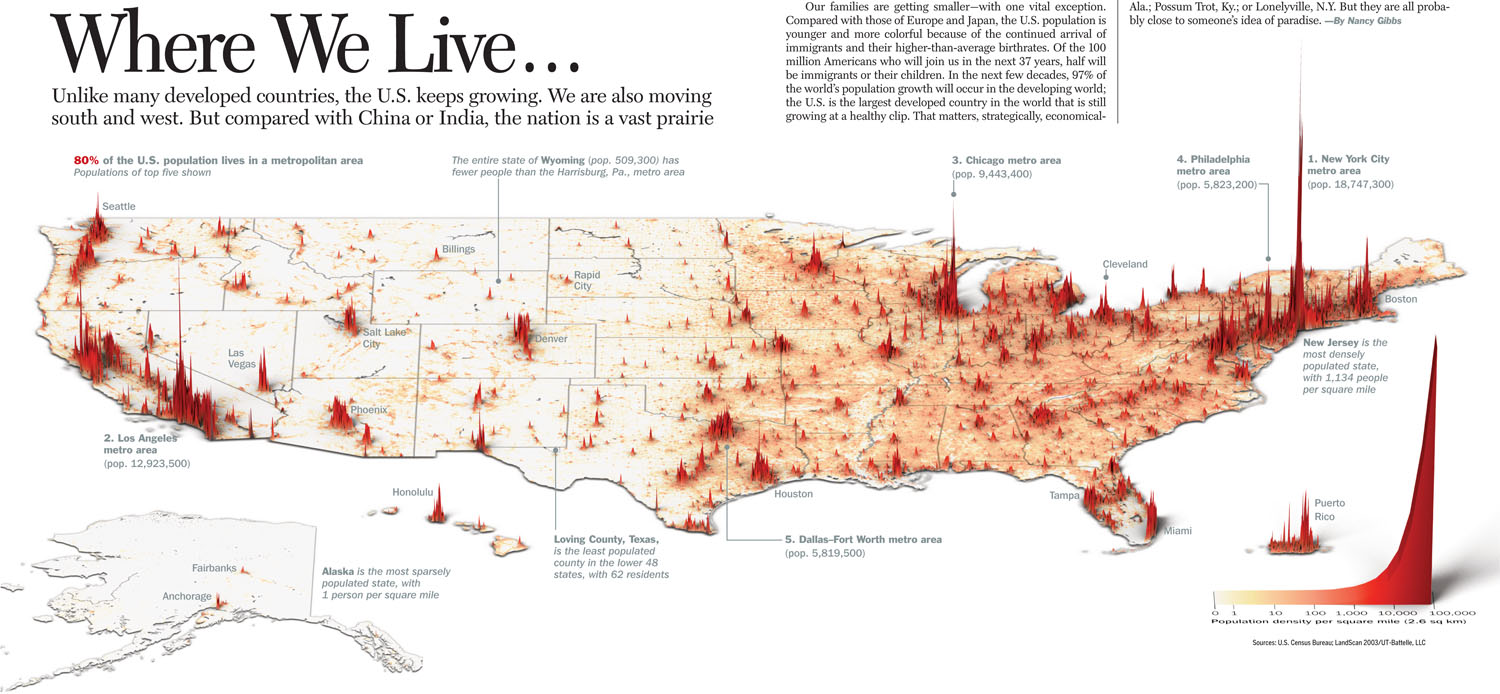



If I'm giving money to a company for a new type of transportation, it's going to be the one committing to the broad goals of bettering humanity, not just capitalizing on someone else proving the existence of a market.
I'm not just behind Tesla, there are other companies like Arcimoto (https://www.arcimoto.com/) that are putting significant effort into redesigning transportation from the ground up.