We are a team of engineers and scientists from DeepMind, Palantir, Oxford and MIT. Our mission is to grow safer, healthier food by deploying fully autonomous greenhouses outside every city on earth. We are backed by leading deep technology funds, including Founders Fund.
We believe that high-tech greenhouses will be an important part of our agricultural future, for improved human nutrition and as a hedge to climate change, and we are doing everything we can to accelerate the deployment of new farms around the world.
We are in stealth mode right now so there's not a huge amount about us online but we've made strong progress with the core technology and I would be happy to speak more about our work privately.
I spent a bunch of time modelling out the unit economics for autonomous greenhouses and struggled to find any combination of technologies that could even come close to competing with the current costs of field agriculture, including labor. Do you folks need something key to change in the competitive landscape (like climate change or very different immigration laws in the US) to become profitable?
There’s a significant efficiency difference between high-tech greenhouses (glasshouses) and warehouse (aka vertical) farms. High-tech greenhouses will not compete with field farms for staple crops, but they are already profitably supplying fresh produce in many countries.
Oh of course, and to be quite honest, I really hope you folks can succeed in your mission. But, I still found that at least locally (in southern Ontario), the unit costs of importing from California still make sense compared to growing locally because of the cost of artificial lighting and the difficulties growing year round. The big greenhouse operations locally grow a premium product that can command a much higher price in order to justify the capex compared to field agriculture or just importing. I assume that premium price would have to go up even more to justify a big investment in automation, right? That's why I was asking if expensive robotics are viable now vs reliant on some change in the market dynamics.
California’s lettuce production alone is a 3 billion dollar industry.
Entire Ag income in Netherlands is around 3 billion dollars.
California lettuce farms have a year round growing season and we move from Salinas to Yuma in winter. We grow organic lettuce with cover cropping and crop rotation.
Glass houses are NOT more efficient than how we grow in CA. We have water shortage and a labour problem. The main problem is labour.
We need robotics to solve our problem. Not data oriented Agtech. Most of the Agtech startups are creating a new sector that didn’t exist before. They are not addressing our throbbing pain point.
Labour. Labour. Labour.
Even automation solutions needs engineers who need to draw 6 figures to work and live in the Bay Area. It’s still cheaper to hire minimum wage labour and make human beings do repetitive manual labour.
There is nothing cheaper than FREE. Sunlight is free. We don’t need energy hungry indoor automation in CA. In east coast maybe..in the frozen northlands of Canada maybe..but CA is an Ag state. We do upwards of 45 billion in Ag income every year. We need real solutions. Every Agtech company wants a piece of the 45 billion dollar pie. They are not working to make it bigger. CA farms are consumers of new tech. Without ROI.
Agtech startups need to Keep It Simple.
Ping me if anyone wants to discuss this further.
[..] GDP From Agriculture in Netherlands decreased to 2544 EUR Million in the second quarter of 2019 from 3071 EUR Million in the first quarter of 2019. GDP From Agriculture in Netherlands averaged 2641.87 EUR Million from 1995 until 2019, reaching an all time high of 3343 EUR Million in the third quarter of 2016 and a record low of 1860 EUR Million in the fourth quarter of 1996.[..]
I'm not in ag but anybody working on a modular elevated track system? Let the sun shine right thru. Automate a ton of physical tasks, like that one gardening startup (forgot name). Some central unit coordinates it all and offers an api, that way third-parties can program specific bots for specific tasks and its all orchestrated without collisions. Allow a whole industry of startups to build on such physical 'Operating Systems'. Seems so obvious I must have seen it in a sci-fi movie or something and I forgot.
You are right. The only scenario where is makes sense is in the Netherlands and even they are struggling to stay in business, meaning they will have to specialise or rethink their business plan. Data analysis in the open field is just as interesting to do and in fact has a much more transferable (eventual) tech stack.
Did you model the cost of transportation and logistics to grow things in the opposite hemisphere out of the local growing season or months of cold storage?
I did! Transportation only accounted for 22% of the cost of a head of lettuce in my local Walmart, which wasn't really enough margin to justify the cost of the artifical lighting necessary to grow in Canada (even in dense southeastern Ontario). I think right now the most realistic application of these technologies is for premium products that are branded as such, like hot house tomatoes or living plants that can command 2-5x the standard barebones import price. Do you have different data?
The only way it would be comparable to CA flown in lettuce is the greenhouse/vertical farms are fully automated and there is a super short supply chain and absolutely no wastage. This can be achieved by supplying to local markets which would shorten supply chain. But the scale would have to be massive to make a buck out of this.
Automated greenhouses must also look into growing underground. In tunnels beneath or near water treatment plants or anywhere where there is steam.
Further, energy will always be an issue. There are two ways to go about it. Cheap electricity by going nuclear. Or advances in material sciences to develop new kinds of indoor lights/batteries or greenhouse material that can help with light/heat/thermal insulation.(one company is doing it with quantum/nano dots as greenhouse material. ETFE can be a better material than greenhouse plastic or glasshouses)
> Our mission is to grow safer, healthier food by deploying fully autonomous greenhouses outside every city on earth.
How exactly is food grown from autonomous greenhouses than traditional greenhouses safer and healthier? Or, alternatively, how is it safer and healthier if it is grown right outside of the cities in which in supply?
different set of problems; equipment failures and mold's & fungus become bigger problems. it's not a closed loop since we need fresh co2 to trigger photosynthesis and nothing is 100% failure proof.
I think the rationale here is that the intensified production in greenhouses frees up formerly used as agricultural land elsewhere that could then be repurposed for wildlife and insects.
Personally I am not sure this math adds up. At least in Germany farming land is categorized and once the land loses its status as farmland, it can never be turned back into farmland, losing much of its monetary value in the process. Thus the land owners have an intrinsic motivation to keep their property in the farmland category.
"... any sort of food production is going to be bad for the environment."
This isn't true per se. There are lots of people trying to farm in an environmentally sensitive manner - like http://www.polyfacefarms.com/. There are discussions to be had about whether this kind of farming can feed enough people in the world, but it's not a given that farming is bad.
Good question. Growing cannabis does not align directly with our mission. However the production methods for cannabis are fairly similar to crops such as tomatoes and so it may be something we consider doing. I want to be clearer on the health benefits before committing.
hey dfsegoat -- GrowPotBot http://growbot.online is 1/3rd focused on cannabis. we also do vegetables so we aren't a "weed appliance"; if you'd like to collaborate and test a prototype sounds like we'd get along. ;-)
Wageningen is the world's leading Agtech university. I just returned 2 weeks ago and the 2025 European Food production estimates are ugly, dairy down 30%, potatoes down, onions down, maize, wheat and other cereals down a lot.
Europe is facing many problems. Soil compaction, climate crisis, lack of labour force, ground water contamination in some places. Very little demand for organic produce. And pest/pathogen pressure. Example: Even places like Spain and Italy are uprooting olive groves and moving it to Turkey and Morocco where labour is cheaper and plant pathogens haven’t entirely destroyed the soil. Africa used to supply a lot of food. But EU insisted on non-GMO. Now that China is moving in to Africa(and South America) with their Belt and Trade initiative, Africa is happy growing for China.
Europe is very hostile to gene technology in plant breeding. A lot of the technologies developed after the 1970s are banned in plant breeding (while they are allowed in medical industries). European legislation also regards CRISPR editing as GMO, and most GMOs are effectively banned in Europe. In America, GMOs are typically allowed, and in America CRISPS editing is not regarded as GMO.
If you are a plant breeding scientist, you can either work in Europe with your hands tied behind your back, or move somewhere else and innovate more freely.
I am sure there are other equally important reasons, but this is one.
Very interesting. I have experience building an automating aquaponics gardens for this very use case. I also have industry experience in "The Valley" and a fancy degree as well. How do I get in touch with you?
I've long been fascinated by this space. From the farm ERP system / IoT, autonomous vehicles in ag, to vertical farms, hydroponics, aquaponics, etc. I'd love to learn more about what you are doing.
How would deploying greenhouses be helping to fight climate change? Many greenhouses now use energy for heating. Or maybe are you talking about passive greenhouses only?
While true, climatization during the summer months is the bigger challenge and probably even more expensive when trying to achieve a closed system to keep out the pests.
A greenhouse in temperate climate (eg. Sweden) captures approx. 2.9 fold the energy amount that is required for heating in the winter. But this excess heat of course is captured in summer, wehen you need to get rid of it. Seasonal heat storage is not easy.
Passive solar greenhouses are promising with that regard.


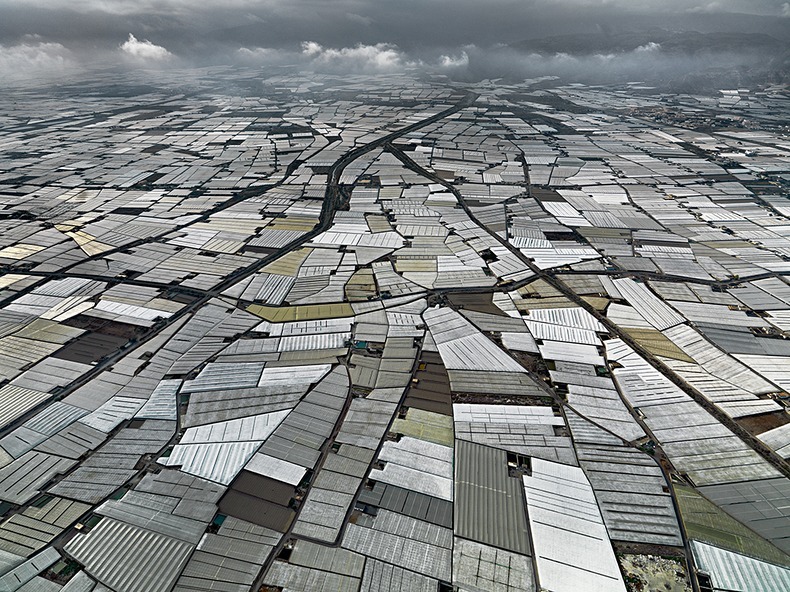
We are a team of engineers and scientists from DeepMind, Palantir, Oxford and MIT. Our mission is to grow safer, healthier food by deploying fully autonomous greenhouses outside every city on earth. We are backed by leading deep technology funds, including Founders Fund.
We believe that high-tech greenhouses will be an important part of our agricultural future, for improved human nutrition and as a hedge to climate change, and we are doing everything we can to accelerate the deployment of new farms around the world.
We are in stealth mode right now so there's not a huge amount about us online but we've made strong progress with the core technology and I would be happy to speak more about our work privately.